
Pool Chemical Safety in Florida: What Every Pool Owner Should Know
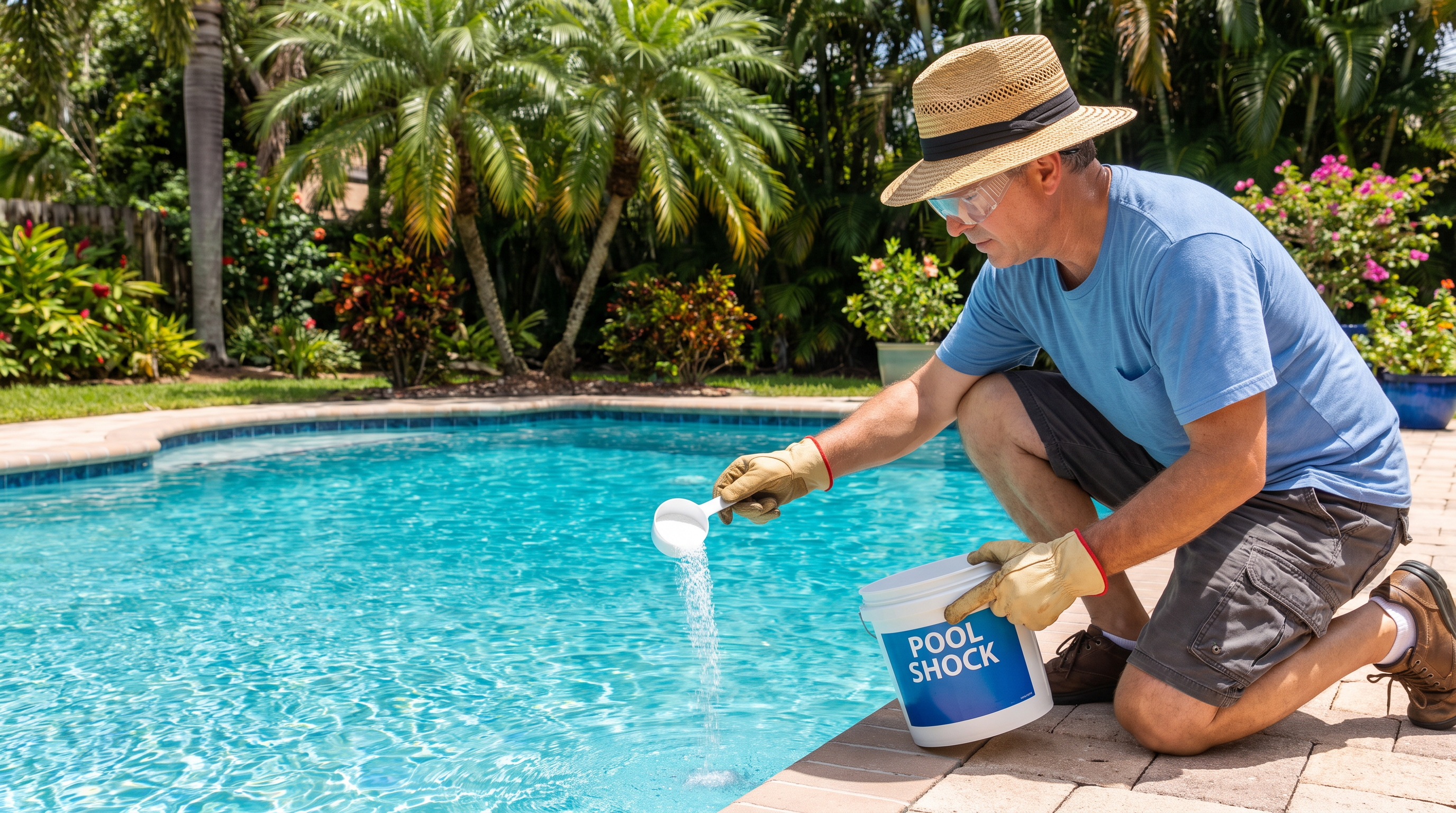
Pool chemistry sounds straightforward until you're managing it in Florida — where the sun is ruthless, the rain is relentless, and a single mistake with the wrong two chemicals can send you to the emergency room. Whether you own a home pool in Winter Garden or manage a short-term rental in Reunion, understanding pool chemical safety isn't optional. It's the difference between a clean, safe pool and a costly, potentially dangerous situation that no amount of YouTube research will prepare you for.
Why Pool Chemistry Is Harder in Florida Than Most States
Pool owners who moved to Central Florida from cooler climates often assume they can manage chemistry the same way they always have. That assumption gets expensive fast.
Florida consistently ranks among the highest states in the country for UV index. On a midsummer afternoon, unstabilized chlorine can deplete almost entirely within hours — not days — simply from sun exposure. If you're dosing your pool in the morning and expecting it to hold through the afternoon, you may be disappointed by sundown.
Heat compounds the problem. Liquid chlorine and algaecide break down faster at elevated temperatures, meaning the products sitting in your shed in July aren't as potent as they were in April. Chemical reactions — including dangerous ones — also accelerate in the heat.
Central Florida's groundwater tends to be hard, with naturally high calcium levels. That calcium interacts with pH and alkalinity, causing scaling on tile, fittings, and pool surfaces when balance slips. And then there's the rain. Florida's summer storms don't just dilute your chemicals — they introduce phosphates and organic debris that feed algae and throw your entire chemistry profile off in a single afternoon.
All of this means Florida pool chemistry requires more frequent testing, more precise dosing, and more careful product handling than most homeowners expect going in.
The Chemicals Every Florida Pool Owner Encounters
Before you can handle chemicals safely, you need to know what you're working with. Here's a plain-language breakdown of the products you'll encounter most often:
Chlorine (liquid, tablet, granular shock): The primary sanitizer. Liquid chlorine (sodium hypochlorite) works fast but degrades quickly. Tablets (trichlor) dissolve slowly in a feeder or floater and contain built-in stabilizer. Granular shock (calcium hypochlorite) is used for rapid chlorine boosts — especially after heavy rain or heavy use.
pH increaser / decreaser: Sodium carbonate raises pH; muriatic acid lowers it. Both require careful handling. Muriatic acid in particular is one of the most hazardous chemicals in your pool kit.
Alkalinity increaser: Sodium bicarbonate (essentially baking soda in pool grade) raises total alkalinity, which acts as a pH buffer. Low alkalinity causes pH to swing wildly.
Cyanuric acid (stabilizer / CYA): Absolutely essential in Florida. Stabilizer bonds to chlorine molecules and shields them from UV destruction. Without adequate CYA levels, you're fighting a losing battle against the Florida sun. See our detailed breakdown of why pool stabilizer is Florida's most important chemical for UV protection.
Algaecide: A preventive and treatment product for algae. Timing matters significantly when combining with chlorine — more on that below.
Calcium chloride: Raises calcium hardness when levels drop too low. Low calcium causes water to pull minerals from your plaster, shortening the life of your pool surface.
Dangerous Combinations: What You Must Never Mix
This is the most important section in this entire post. Pool chemicals are generally safe when used correctly and separately. Mixed incorrectly, several common combinations produce violent reactions or toxic gases. These are not theoretical risks — they send people to hospitals every year.
Liquid chlorine + granular shock (calcium hypochlorite): Never combine these in a bucket or add them to the pool at the same time. Mixing sodium hypochlorite and calcium hypochlorite creates a violent exothermic reaction that can cause a fire or explosion. Add them to the pool separately, hours apart, and never pre-mix.
Muriatic acid + chlorine: This combination releases toxic chlorine gas. Muriatic acid should always be diluted in a bucket of water first and added to the pool well away from where you've recently added chlorine. Never add acid to the skimmer.
Chlorine + algaecide (wrong order): Algaecide neutralizes chlorine — that's not a safety hazard in the explosive sense, but it's an expensive mistake. Always add chlorine first, allow it to dissipate to normal levels, then add algaecide. Adding algaecide into a heavily shocked pool wastes both products.
Any two pool chemicals together without reading the labels: This sounds obvious, but it's violated constantly. Never assume. Read both labels every time before adding anything to your pool.
If you're ever unsure whether a reaction has occurred or you've accidentally mixed chemicals, move away from the area immediately, ventilate the space if indoors, and contact Florida Poison Control at 1-800-222-1222 for guidance.
Safe Chemical Storage in Florida
Florida summers create storage hazards that don't exist in most of the country. On a hot afternoon, the interior temperature of an uninsulated garage can exceed 120°F. That's not just uncomfortable — it accelerates the decomposition of pool chemicals and significantly increases the risk of fire, explosion, or toxic off-gassing.
Follow these storage rules without exception:
Store in a cool, dry, well-ventilated area. A dedicated outdoor shed with ventilation is better than a sealed garage. Keep it shaded if possible.
Keep granular and liquid chemicals physically separated. Store them on different shelves or in different areas entirely. A spill from a liquid container onto granular shock is exactly the kind of accident that causes injuries.
Never store in direct sunlight. UV and heat degrade products faster and increase pressure inside sealed containers.
Use original containers only. Never transfer chemicals into unmarked bottles, buckets, or containers. Old containers from other chemicals are especially dangerous — residue can trigger reactions.
Lock storage away from children. Pool chemicals are poisonous. Even products that seem benign, like pH increaser, can cause serious harm if ingested or if they contact eyes.
Safe Handling Practices
Even the right chemicals, used in the right order, can cause harm if they're handled carelessly. These practices apply every single time you work with pool chemicals:
Always add chemicals to water — never water to chemicals. Pouring water onto a concentrated chemical can cause a violent splashback reaction. Whether it's muriatic acid or granular shock, you pre-dissolve or dilute by adding the chemical to water, not the reverse.
Pre-dissolve granular shock in a bucket before adding to the pool. Tossing granular shock directly into the pool — especially near the liner or over a vinyl surface — can cause bleaching or damage. Mix it in a bucket of pool water first, then distribute it evenly.
Wear gloves and eye protection for liquid chlorine and muriatic acid. These are not optional precautions. A splash of muriatic acid in your eyes is a medical emergency. Nitrile gloves and chemical-rated safety glasses are inexpensive and widely available.
Never add chemicals through the skimmer while the pump is off. Concentrated chemicals sitting in a stagnant skimmer line can corrode equipment or create a chemical pocket that hits the system in a sudden surge when the pump restarts.
Add chemicals in the evening or after sunset. This is especially important in Florida. Morning additions are largely burned off by midday UV. Evening additions allow chemicals to circulate and work through the night without UV interference.
Recognizing When Your Pool Chemistry Is Off
Your pool will often tell you something is wrong before your test kit does. Know what to look for:
Burning eyes or skin after swimming: This is usually a sign that pH is outside the ideal 7.4–7.6 range, or that chloramines (combined chlorine) have built up from insufficient free chlorine. It's not always “too much chlorine” — sometimes it's actually too little.
Cloudy water: Can signal a chemistry imbalance, high calcium, a filtration problem, or the early stages of an algae bloom. Don't ignore cloudy water — it rarely resolves on its own.
Green water: Chlorine has failed. This happens in Florida when CYA is too low (causing UV burnoff), when levels simply run out, or when algae gets a foothold after a heavy rain. Green water is a more serious situation than most homeowners realize — read our full guide on what green pool water means and how to address it in Florida pools.
Scale on tile or fittings: White or gray deposits on waterline tile, fittings, or equipment usually indicate calcium hardness is too high, pH is elevated, or both. Left unaddressed, scale damages equipment and makes surfaces rough and difficult to clean.
If pH is your recurring problem, our guide on how to raise pH in a Florida pool walks through the full adjustment process with Florida-specific considerations.
When to Stop DIYing and Call a Professional
There's no shame in managing your own pool chemistry — plenty of homeowners do it successfully. But there are situations where calling a professional is the right call, both for safety and for cost.
Call a pro if you've had a chemical incident — a splash, a reaction, a product mix-up — and you're not certain what happened or what's now in your pool. Call a pro if your water won't balance after two or more serious attempts. Chasing chemistry in circles usually means something structural is off (a calibration issue with your test kit, a stabilizer problem, a filtration issue) that needs eyes on it.
For short-term rental property managers, the calculation is different. A guest complaint about burning eyes or skin irritation is not just a one-star review risk — it's a potential liability and insurance issue. A pool that's off-balance on a guest's first swim day can ruin an entire booking. Recurring STR properties, especially those in Reunion, Davenport, and Celebration where guest turnover is high and pools get heavy use, benefit most from consistent weekly professional service. Chemistry managed by a pro means one less thing that can go wrong between guest stays.
Frequently Asked Questions
How often should I test my pool water in Florida?
At minimum, test your pool water twice a week during summer months in Florida. The combination of intense UV, heat, heavy rain, and high bather loads means chemistry can shift significantly in 48 to 72 hours. If your pool gets heavy use or you've had a big storm, test before and after. A basic test strip works for quick checks, but a liquid drop test kit or digital tester gives you more accurate readings for pH, chlorine, alkalinity, and CYA.
Is it safe to swim right after adding pool chemicals?
It depends on the chemical. After adding liquid chlorine or granular shock, wait until the pump has circulated the water for at least 15 to 30 minutes and your free chlorine level has dropped back to the 1–3 ppm range before swimming. After adding muriatic acid to adjust pH, wait at least 30 minutes with the pump running. When in doubt, test before anyone gets in the water. Never swim immediately after a large chemical addition.
Can I store pool chemicals in my Florida garage?
It's risky and generally not recommended during Florida summers. Garage temperatures can exceed 120°F on hot afternoons, which accelerates chemical breakdown and creates real fire and explosion hazards — particularly with granular chlorine products like calcium hypochlorite. If your garage is air-conditioned, it's safer, but still not ideal. A dedicated, shaded, ventilated outdoor storage box or shed is the better option. Always keep granular and liquid products stored separately, regardless of location.
What's the most common chemistry mistake Florida pool owners make?
Neglecting cyanuric acid (stabilizer). Many homeowners test for chlorine, pH, and alkalinity but never check CYA levels. In Florida's UV environment, chlorine without adequate stabilizer (ideally 30–50 ppm for most pools) burns off so quickly that you're essentially pouring money into the pool with little lasting effect. The second most common mistake is adding chemicals in the middle of the day, when UV immediately degrades them. Evening is almost always the better time to dose your Florida pool.
Let a Professional Handle the Chemistry
Pool chemistry in Florida is genuinely demanding, and the stakes — for your equipment, your guests, and your family — are real. If you'd rather not spend your evenings testing water and calculating dosages, The Pool Mechanic's professional weekly pool maintenance service takes care of all of it for you. We manage chemistry, equipment checks, and water balance for homeowners and property managers across Winter Garden, Davenport, Clermont, Reunion, Celebration, and the surrounding area — so your pool is always ready, always safe, and never a liability. Call us at 407-883-0896 to get started.

Comments