
Pool Deck Resurfacing in Central Florida: A Complete Guide
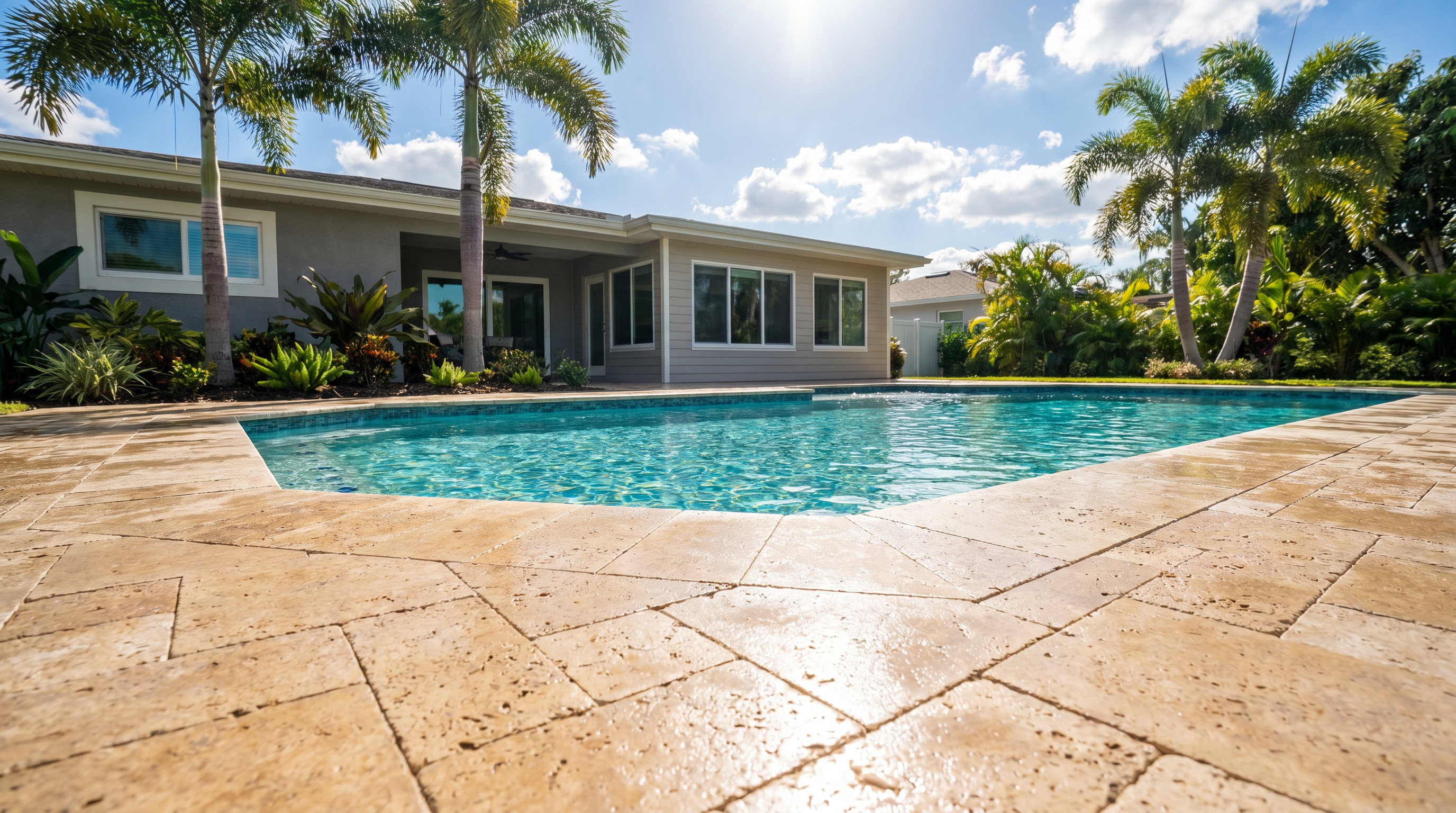
Pool deck resurfacing in Central Florida is one of the highest-impact upgrades a homeowner or rental property manager can make — and one of the most misunderstood. The wrong material choice, or waiting too long to act, can turn a cosmetic fix into a full replacement job that costs three times as much. This guide breaks down every material option, what it costs, how long it takes, and — most importantly — what actually survives years of Florida sun, heat, and heavy foot traffic.
Why Florida Pool Decks Deteriorate Faster Than You Think
Central Florida averages more than 230 sunny days per year, and UV radiation at this latitude is intense enough to degrade most deck coatings within five to seven years without proper maintenance. Add in the humidity, afternoon thunderstorms, and pool chemical splash-back, and you have one of the harshest environments a concrete surface can face.
The most common signs that a pool deck needs resurfacing: visible cracking or spalling, surface that stays hot enough to burn bare feet, peeling or flaking coatings, and widespread staining that cleaning can't touch. If you're seeing two or more of these, resurfacing is the right call. If the concrete slab itself is cracked through or heaving, that's a replacement conversation — not a coating job.
For homeowners in Clermont, Davenport, and the Four Corners area, seasonal temperature swings between 40°F winter nights and 95°F summer days create expansion and contraction cycles that stress surface coatings year-round. Choosing a material rated for Florida conditions isn't a luxury — it's a requirement.
Material Options: What Works in Central Florida
Not every deck material sold in the U.S. performs equally in Florida. Here's an honest breakdown of the four most common options and how they hold up in this specific climate.
Kool Deck (Textured Acrylic Coating)
Kool Deck is a Mortex-brand spray-applied acrylic coating that's been a Florida staple for decades. It reduces surface temperature by up to 30°F compared to bare concrete, which is a meaningful difference when your deck hits 120°F on a July afternoon. The texture also provides solid slip resistance.
Cost runs $3–$6 per square foot installed. Lifespan is typically 10–15 years with proper sealing every two to three years. It's a good baseline option for residential pools, especially for budget-conscious homeowners who want a proven product. The downside: color options are limited and the look is utilitarian rather than upscale.
Travertine Pavers
Travertine is the premium choice for Central Florida pools, and for good reason. Natural stone stays cool underfoot because its porous structure doesn't absorb and retain heat the way dense materials do. It's also visually striking — the warm beige and ivory tones photograph well, which matters for short-term rental properties where listing photos drive bookings.
Cost ranges from $15–$25 per square foot installed, which includes removing the existing surface if needed. Travertine requires sealing on installation and resealing every two to three years. The porous surface can harbor algae and mold in shaded areas if not maintained, so regular cleaning is part of the ownership equation. For rental properties managed through platforms like Airbnb and VRBO, travertine's durability and curb appeal generally justify the higher upfront cost.
Concrete Pavers
Concrete pavers offer a middle ground between the budget-friendly acrylic coating and the premium travertine price point. Modern paver designs have improved significantly — you can find textured, tumbled, and color-varied options that mimic natural stone at $8–$15 per square foot installed.
Pavers handle Florida's freeze-thaw cycles well (what little of them we have), and individual pavers can be replaced if cracked, which is a real advantage over monolithic coatings. The joints between pavers can allow weed growth and need periodic sand replenishment, but overall maintenance is manageable.
Concrete Coatings (Spray Deck, Overlay Systems)
Micro-topping and spray deck overlay systems apply directly over existing concrete, which makes them the fastest and most affordable resurfacing option when the underlying slab is structurally sound. A skilled crew can resurface a 1,000-square-foot deck in one to two days. Cost: $4–$8 per square foot depending on the finish and any decorative scoring or color work.
Quality varies significantly with concrete coatings — installation technique, primer adhesion, and sealer quality determine how long the finish lasts. A properly applied overlay in Florida should hold up eight to twelve years. A poorly applied one starts peeling within two to three. This is not a category where hiring the cheapest crew pays off.
What Pool Deck Resurfacing Costs in Central Florida (2025–2026)
For a typical residential pool deck of 800–1,200 square feet in the Clermont, Davenport, or Winter Garden area, here are realistic installed cost ranges:
Acrylic/Kool Deck coating: $2,400–$7,200
Concrete overlay/spray deck: $3,200–$9,600
Concrete pavers: $6,400–$18,000
Travertine pavers: $12,000–$30,000
Those ranges are wide because scope varies. A deck that needs crack repair, pressure washing, and surface prep before any coating goes on adds cost. Demolition and disposal of an old surface adds more. Get a written scope of work before you agree to any number.
If your pool surface itself is also showing its age — chalky, stained, or rough — it often makes sense to bundle pool deck resurfacing with pool resurfacing and replastering while the crew is already on-site. Coordinating both projects at once typically saves 10–15% compared to scheduling them separately.
How Long Does Pool Deck Resurfacing Take?
Timeline depends on the material. A concrete overlay or acrylic coating project on a standard residential deck typically takes two to four days from start to finish, including prep, application, and cure time. You should plan to keep foot traffic off the surface for at least 24–48 hours after the final coat.
Paver installations take longer — five to ten days is typical for a full tear-out and reset, depending on crew size and deck complexity. Travertine projects at the high end of the price range can run two weeks when you factor in custom cuts, edge work, and sealing.
Weather matters in Central Florida. Summer afternoon rains can delay application windows, and ambient humidity affects cure time for coatings. Most experienced contractors plan around this — if a crew is promising a three-day turnaround in August without accounting for weather windows, that's a red flag.
Homeowners in Clermont and surrounding communities should plan resurfacing projects for late winter or early spring when the weather is driest and demand is lower — meaning faster scheduling and sometimes better pricing. That said, pool deck work happens year-round here because the climate allows it.
Resurface or Replace? How to Tell the Difference
Resurfacing works when the existing concrete slab is structurally intact. Hairline cracks, surface spalling, and cosmetic wear are all resurfacing problems. A contractor can fill minor cracks before applying a new surface, and the finished result will look clean and perform well for years.
Replacement is necessary when: the slab has shifted or settled unevenly, large sections have heaved or sunk, structural cracks run through the full depth of the concrete, or the deck has repeated drainage failures that are causing erosion underneath. Coating over a compromised slab is money wasted — the new surface will fail in the same places the old one did, just faster.
A good contractor will probe the slab, check for voids, and be honest about whether resurfacing is appropriate. If a salesperson is pushing a coating job on a deck with obvious structural issues to avoid losing the sale, walk away. For property managers overseeing multiple rental homes in the Davenport area, getting an accurate assessment upfront protects your maintenance budget and prevents repeat calls on the same property.
Note: The Florida Building Code requires permits for certain pool deck work, particularly full replacements. Check with your local municipality before starting any major project — an unpermitted deck repair can complicate a property sale or insurance claim down the road.
The Pool & Hot Tub Alliance recommends having your pool deck professionally inspected every three to five years in high-UV climates like Florida's to catch surface degradation before it becomes a structural problem.
Schedule Your Pool Deck Resurfacing in Central Florida
If your deck is cracking, discoloring, or holding heat that makes it uncomfortable to walk on, it's time to stop putting off the call. The Pool Mechanic works with homeowners and short-term rental property managers across Central Florida to assess deck conditions, recommend the right material for each situation, and deliver resurfacing work that holds up in this climate. Request your free assessment or call 407-883-0896 for fast, local service in Central Florida.
Frequently Asked Questions
How long does pool deck resurfacing last in Florida?
It depends on the material. Acrylic coatings like Kool Deck typically last 10–15 years with regular sealing. Concrete overlays run 8–12 years. Travertine and concrete pavers, properly maintained, can last 20–30 years or longer. Florida's UV intensity and heat cycles are hard on coatings, so sealing on schedule is the single biggest factor in extending lifespan.
Can I resurface my pool deck myself?
Surface prep is the most critical part of any deck coating job, and it's also the most common place DIY projects fail. If the surface isn't properly cleaned, etched, and primed, even a quality coating will peel within a year or two. Most homeowners in Central Florida are better served hiring an experienced contractor and getting it done right the first time.
What is the coolest pool deck material for Florida?
Travertine consistently tests as the coolest natural paver surface in direct Florida sun because of its porosity and light color. Among coatings, Kool Deck (and comparable acrylic systems) perform best for heat reduction compared to standard concrete or darker-colored overlays.
Do I need a permit to resurface my pool deck in Florida?
A like-for-like resurfacing — applying a new coating over an existing slab — typically doesn't require a permit in most Central Florida municipalities. Full demolition and replacement usually does. Permit requirements vary by county and city, so confirm with your local building department or ask your contractor before work starts.
How much does pool deck resurfacing cost in Central Florida?
For a standard 800–1,200 square foot residential deck, expect $2,400–$7,200 for acrylic coatings, $3,200–$9,600 for spray deck overlays, and $12,000–$30,000 for travertine pavers. Final cost depends on existing surface condition, material choice, and any prep or repair work required before the new surface goes down.
How soon can I use my pool after deck resurfacing?
Most coatings and overlays require 24–48 hours of cure time before foot traffic. Full curing — where the surface reaches maximum hardness — typically takes five to seven days. Your contractor should give you specific guidance based on the product used and weather conditions at the time of installation.
Comments