
State Certified Pool Contractor License CPC1459337
Saltwater Pool Conversion in Central Florida
Thinking about converting your pool to saltwater? You're not alone. Saltwater systems are now the most popular pool upgrade in Central Florida — and for good reason. Lower chemical costs, softer water, and less irritation make saltwater pools easier to maintain and more enjoyable to swim in.
The Pool Mechanic converts chlorine pools to saltwater systems across Winter Garden, Davenport, Clermont, Reunion, Celebration, and the surrounding area. Here's everything you need to know before making the call.
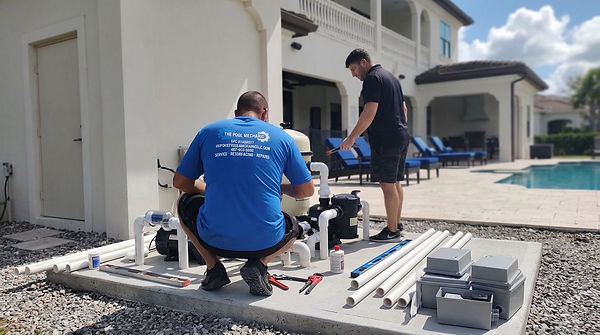
How Saltwater Pool Conversion Works
A saltwater pool isn't chlorine-free — it generates its own chlorine on-site using a device called a salt chlorine generator (also called a salt cell or SWG). You add pool-grade salt to the water, and the generator passes that salinated water through an electrolytic cell. The electrochemical reaction converts dissolved salt (sodium chloride) into chlorine gas, which dissolves immediately into the water as hypochlorous acid — the same sanitizer in traditional chlorine pools, just produced continuously and in smaller, more consistent doses.
The result is a pool that stays sanitized automatically, without the sharp chlorine spikes that come from manual dosing. Salt levels in a saltwater pool (around 3,200 parts per million) are about one-tenth the salt concentration of ocean water — barely perceptible to most swimmers.

Saltwater Pool Pros and Cons: Is It Worth Converting?
The decision to convert comes down to how you use your pool and what frustrates you most about maintaining it. Here's an honest breakdown.
Benefits of Saltwater Pool Conversion
Gentler on skin, eyes, and swimwear. Traditional chlorine pools rely on periodic shock treatments that spike chlorine levels. Saltwater systems maintain lower, steadier chlorine levels — which means less red-eye, less skin irritation, and less bleaching of swimwear. This matters especially for short-term rental properties in Reunion and Davenport where guests swim multiple times a day.
Lower ongoing chemical costs. Pool-grade salt costs $5–$20 per 40-lb bag. Most standard Florida pools need 3–6 bags per year for maintenance top-ups. Compare that to $50–$100/month on chlorine tablets, shock, and balancers for a traditional system. Most pool owners recover the upfront conversion cost within 2–3 years through chemical savings alone.
Automated sanitation. The generator runs continuously with your pump, keeping chlorine production consistent. You stop worrying about remembering to add chlorine every few days. For vacation rental and property managers, this means fewer panicked calls mid-guest-stay about cloudy water.
Softer water feel. The slight salinity gives pool water a noticeably softer feel. Most swimmers describe it as a more comfortable swim — closer to a natural body of water than a chemical pool.
Disadvantages of Saltwater Pools
Higher upfront cost. The salt chlorine generator itself costs $600–$1,800 for the equipment, plus $200–$500 for professional installation. DIY installation looks cheaper on paper but risks voiding the equipment warranty and improperly sizing the cell for your pool's gallonage.
Salt cell replacement every 3–7 years. Salt cells have a finite lifespan. Expect to replace the cell every 3–7 years depending on usage and maintenance — a cost of $200–$700 depending on the brand and cell size. With proper maintenance (cleaning calcium deposits off the cell regularly), most cells reach the upper end of that range.
Salt can be corrosive. Pool-grade salt at low concentrations is mild, but over time it can accelerate corrosion on certain metals, stone coping, and pool equipment not rated for saltwater use. Most modern equipment is salt-compatible, but older heater heat exchangers, certain decorative elements, and concrete pool decks should be assessed before conversion.
Still requires water chemistry management. A saltwater system handles chlorine production — it doesn't manage pH, alkalinity, stabilizer, or calcium hardness. You still need to test and balance water chemistry regularly. In Florida's climate, cyanuric acid (stabilizer) levels need particular attention because UV exposure degrades it faster than in northern climates.
Ready to Stop Hauling Chlorine?
Most Central Florida pools convert in a single visit. Call 407-883-0896 or book online and we'll assess your pool, quote the job, and schedule installation—usually within the same week.
How Much Does Saltwater Pool Conversion Cost in Central Florida?
Most Central Florida homeowners pay between $2,000 and $6,000 for a professional saltwater pool conversion, depending on pool size, equipment choice, and whether any existing equipment needs to be upgraded.
Typical cost breakdown:
• Salt chlorine generator (equipment): $600–$1,800 — entry-level units handle pools up to 15,000 gallons; larger or commercial pools require higher-capacity cells
•Professional installation: $200–$500 — includes electrical connection, plumbing integration, and initial calibration
• Initial salt: $50–$150 — 6–10 bags to reach target salinity (3,000–3,500 ppm)
• Initial chemistry rebalance: $50–$100 — adjusting pH, alkalinity, and stabilizer for the new system
Pool size is the biggest cost driver. A 15,000-gallon residential pool sits at the lower end. A 30,000-gallon pool common in vacation rental properties in Reunion and Davenport requires a higher-capacity cell and typically costs $1,500–$3,500 installed.
Ongoing annual costs are low: $30–$120/year in salt for top-ups, plus occasional cell cleaning. The ENERGY STAR program also notes that pairing a saltwater system with a variable-speed pump — which The Pool Mechanic routinely installs — can cut pool energy costs by up to 70% compared to single-speed pumps, adding further long-term savings.
What the Saltwater Pool Conversion Process Involves
When The Pool Mechanic handles your conversion, we follow a structured process that protects your existing equipment and gets your new system running correctly from day one.
-
Equipment and compatibility assessment. We inspect your current pump, filter, heater, plumbing, and pool surface. Most existing equipment is compatible with saltwater systems — but older heater heat exchangers or certain decorative materials may need attention before you add salt.
-
Salt chlorine generator selection. We size the cell to your pool's actual gallonage, not an estimate. Undersizing is the most common DIY mistake — it forces the cell to run at 100% output constantly, burning through it in 2–3 years instead of 5–7.
-
Installation and electrical connection. The generator control board mounts near your equipment pad, and the cell plumbs inline after the filter and heater. In Florida, the low-voltage electrical connection must be completed by a licensed professional — an installation not done to code can fail inspection or void your homeowner's insurance claim if equipment is later damaged.
-
Salt addition and initial chemistry balance. We calculate the exact amount of pool-grade salt needed to reach 3,000–3,500 ppm, add it, and run the pump to dissolve it fully. We then test and adjust pH, total alkalinity, cyanuric acid, and calcium hardness to the ranges the new system requires.
-
System startup and calibration. Once salt is dissolved and chemistry is balanced, we start the generator, verify the cell is producing chlorine, and set the output percentage based on your pool's usage. We walk you through the control panel and leave you with target ranges for your first few weeks of monitoring.

Equipment Compatibility: What Usually Needs to Change?
Most pools convert without major equipment changes. Here's what we check on every job.
Pump and filter: Compatible with saltwater systems in virtually all cases. If your pump is single-speed and aging, we'll often recommend upgrading to a variable-speed pump at the same time — the energy savings more than pay for the upgrade within 2–3 years.
Pool Heater: Most modern heaters are salt-compatible. Older copper heat exchangers can corrode in saltwater. We check the manufacturer's saltwater rating and advise accordingly — sometimes a simple sacrificial anode protects the existing heater for years at a fraction of the replacement cost.
Pool surface: Plaster, pebble, and fiberglass surfaces all work fine with saltwater systems. Exposed metal fittings, stone coping that isn't properly sealed, or certain tile adhesives can experience accelerated wear — we flag these during the assessment.
Pool deck and surroundings: Salt isn't harsh at pool concentrations, but splash zones around concrete decking should be sealed if they're not already. Landscaping within splash range is worth monitoring, particularly salt-sensitive plants.
Saltwater Pool Maintenance in Florida: What's Different
Florida's climate creates two specific maintenance considerations that don't apply the same way up north.
Cyanuric acid (stabilizer) degrades faster. Florida's year-round UV exposure burns off cyanuric acid faster than the national average. Low stabilizer means the salt cell's chlorine production gets destroyed by sunlight before it can sanitize the pool. We recommend testing stabilizer every 4–6 weeks during summer, not just monthly — and topping up to 70–80 ppm before it drops below 50.
Calcium scale on the salt cell. Central Florida's naturally hard water deposits calcium scale on the salt cell's titanium plates. A cell running with scale buildup produces less chlorine and wears out faster. Cleaning the cell with a diluted acid solution every 3–4 months is the single most effective maintenance step for cell longevity. We always recommend regular cell inspections as a core part of saltwater system maintenance.
For short-term rental pools in Reunion, Davenport, and Four Corners, we offer weekly pool maintenance that includes cell inspection, chemistry testing, and adjustment — so your pool never becomes a guest complaint during a busy rental weekend.

Saltwater Pool Conversion Service Areas
The Pool Mechanic provides professional saltwater pool conversions across Central Florida, including:
-
-
Winter Garden—residential pools and HOA communities
-
Davenport—vacation rental and STR pools in vacation home communities
-
Clermont—residential pools throughout the Clermont area
-
Reunion Resort—high-end vacation home pools
-
Celebration—residential and HOA pools
-
Four Corners—vacation rental communities
-
Horizon West—newer residential developments
-
If you’re not sure whether you’re in our service area, contact us—we’ll confirm quickly.
Why Central Florida Pool Owners Choose The Pool Mechanic for Saltwater Conversions
Most pool companies sell you a system and hand you the manual. We size the salt chlorine generator to your pool's actual gallonage, handle the electrical connection to code, and calibrate the chemistry before we leave — so the system runs right from day one, not after three weeks of troubleshooting.
We convert pools across Reunion, Davenport, Four Corners, and Winter Garden — including high-traffic vacation rental properties where a poorly installed system means guest complaints and emergency call-outs mid-season. Property managers trust us because we get it right the first time and back our work.
Before any equipment goes in, we assess your existing pump, heater, and fittings for saltwater compatibility. You get a straight answer on what the conversion costs, what (if anything) needs upgrading, and what the ongoing maintenance looks like —no surprises after the invoice.