
State Certified Pool Contractor License CPC1459337
Swimming Pool Leak Detection Services in Central Florida
Swimming pool leak detection is the specialized process of identifying and locating water loss sources in swimming pools before they escalate into costly structural damage and water waste. Central Florida pool owners lose thousands of gallons and hundreds of dollars annually due to undetected leaks that could have been identified and repaired early.
At The Pool Mechanic, we've performed leak detection services across Winter Garden, Clermont, Davenport, Celebration, and Reunion for over a decade. Our systematic approach combines pressure testing, dye testing, and equipment inspection to pinpoint leak sources with precision.
Why Swimming Pool Leak Detection Matters
A small pool leak wastes more than water—it wastes money. Pool owners who ignore leak detection face average annual costs of $2,400 in excess water bills, chemical waste, and accelerated equipment wear. In Central Florida's sandy soil, untreated leaks create sinkholes and foundation instability around pool decks.
The average residential pool holds 20,000 gallons. Normal evaporation in Central Florida accounts for 1/4 inch of water loss per day. Anything beyond this indicates a leak requiring professional detection.
Important: Pool leaks compound exponentially. A hairline crack that loses 100 gallons per day will expand to 500+ gallons daily within six months due to water pressure and soil erosion.



Signs Your Pool Has a Leak
Pool leak symptoms appear gradually, making early detection challenging without professional testing. These warning signs indicate immediate leak detection is needed:
-
Water loss exceeding 1/4 inch per day consistently
-
Wet spots or standing water around pool equipment or deck
-
Water bills increasing 25% or more without usage changes
-
Visible cracks in pool shell, tile, or coping
-
Pool equipment cycling more frequently than normal
-
Chemical levels becoming difficult to balance
-
Air bubbles appearing in return jets
-
Deck settling or cracking near pool walls
Central Florida's freeze-thaw cycles and ground shifting make leak detection particularly critical. What appears as minor water loss in January becomes major structural damage by summer.


Pool leaks occur in predictable patterns based on construction, age, and maintenance history. Our leak detection process targets these high-probability areas first:
Pool Shell Leaks
Concrete and fiberglass shells develop leaks at stress points where walls meet floors, around steps, and at light fixtures. Plaster deterioration creates pinhole leaks that expand rapidly in Florida's mineral-heavy water.
Plumbing System Leaks
Underground plumbing accounts for 60% of pool leaks we detect. Return lines, suction lines, and main drains develop leaks where pipes connect to fittings or pass through pool walls. Sand infiltration is common in Central Florida installations.
Equipment Pad Leaks
Pool pumps, filters, and heaters develop leaks at gaskets, unions, and valve assemblies. Equipment leaks often go unnoticed because they drain into landscaping rather than creating visible puddles.
Skimmer and Return Fitting Leaks
Plastic fittings crack from UV exposure and chemical exposure. The seal between fitting and pool shell deteriorates, creating leaks behind pool walls that are impossible to detect without professional equipment.
Most leaks are found and diagnosed in a single visit. Book with the Pool Mechanic and know exactly what you're dealing with by end of day →
Common Pool Leak Locations
Pool Mechanic Leak Detection Process
Our systematic leak detection process eliminates guesswork and false positives. Each pool repair assessment follows this proven methodology:
Initial Assessment
We document water loss rate, equipment operation, and visual inspection findings. This baseline measurement distinguishes actual leaks from normal evaporation and splash-out.
Pressure Testing
Individual plumbing lines receive isolated pressure tests using specialized equipment. We pressurize each line to 15 PSI and monitor for pressure drops that indicate leak locations.
Dye Testing
Food-grade dye applied near suspected leak points reveals water flow patterns invisible to naked eye inspection. Dye testing confirms leak locations identified through pressure testing.
Equipment Inspection
All [pool equipment](https://www.pool-mechanic.com/services/pool-equipment-repair) receives detailed inspection for gasket failure, crack development, and fitting deterioration. Equipment leaks often mask underlying structural issues.
Comprehensive Report
We provide detailed findings including leak locations, estimated repair costs, and priority recommendations. Photos document all leak sources for insurance claims when applicable.

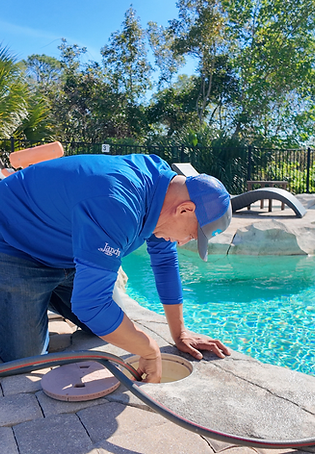
Regular maintenance and inspection prevent most pool leaks from developing. Our recommendations for Central Florida pool owners:
Monitor water level daily using pool skimmer as reference point. Consistent loss exceeding evaporation rates indicates developing leaks requiring investigation.
Inspect equipment monthly for signs of water around pumps, filters, and heaters. Address gasket replacement before minor seepage becomes major leaks.
Schedule annual professional inspections focusing on underground plumbing and structural integrity. Preventive detection costs less than reactive emergency repairs.
Maintain proper water chemistry to prevent accelerated surface deterioration. Balanced water reduces shell and fitting degradation that leads to leak development.
Preventing Future Pool Leaks
When to Schedule Emergency Leak Detection
Some leak situations require immediate professional attention to prevent property damage:
-
Visible structural damage: Cracks in pool shell or deck settling require same-day assessment
-
Equipment failure patterns: Pumps losing prime or cycling frequently indicate major plumbing leaks
-
Sudden water loss: Losing more than 2 inches in 24 hours suggests significant structural failure
-
Chemical imbalance: Inability to maintain chlorine levels often indicates large volume water loss
-
Utility alerts: Water company notices about usage spikes typically indicate pool system leaks
The Pool Mechanic offers same-day emergency leak detection for urgent situations. Early intervention prevents minor leaks from becoming major reconstruction projects.
Call for a pool leak detection →

Why Choose The Pool Mechanic for Leak Detection
Our leak detection success rate exceeds 95% because we use proven methodology rather than guesswork. Every technician carries specialized pressure testing equipment and undergoes continuous training in detection techniques.
We serve Central Florida's largest vacation rental market, where leak detection must be accurate and fast. Property managers trust our assessments because we understand the cost of extended pool downtime.
Contact The Pool Mechanic today for professional swimming pool leak detection. Our comprehensive assessment identifies all leak sources and provides clear repair priorities. Don't let small leaks become expensive problems—schedule your leak detection service now.