
Why Is My Pool Water Cloudy? Causes and Fixes for Central Florida Pools
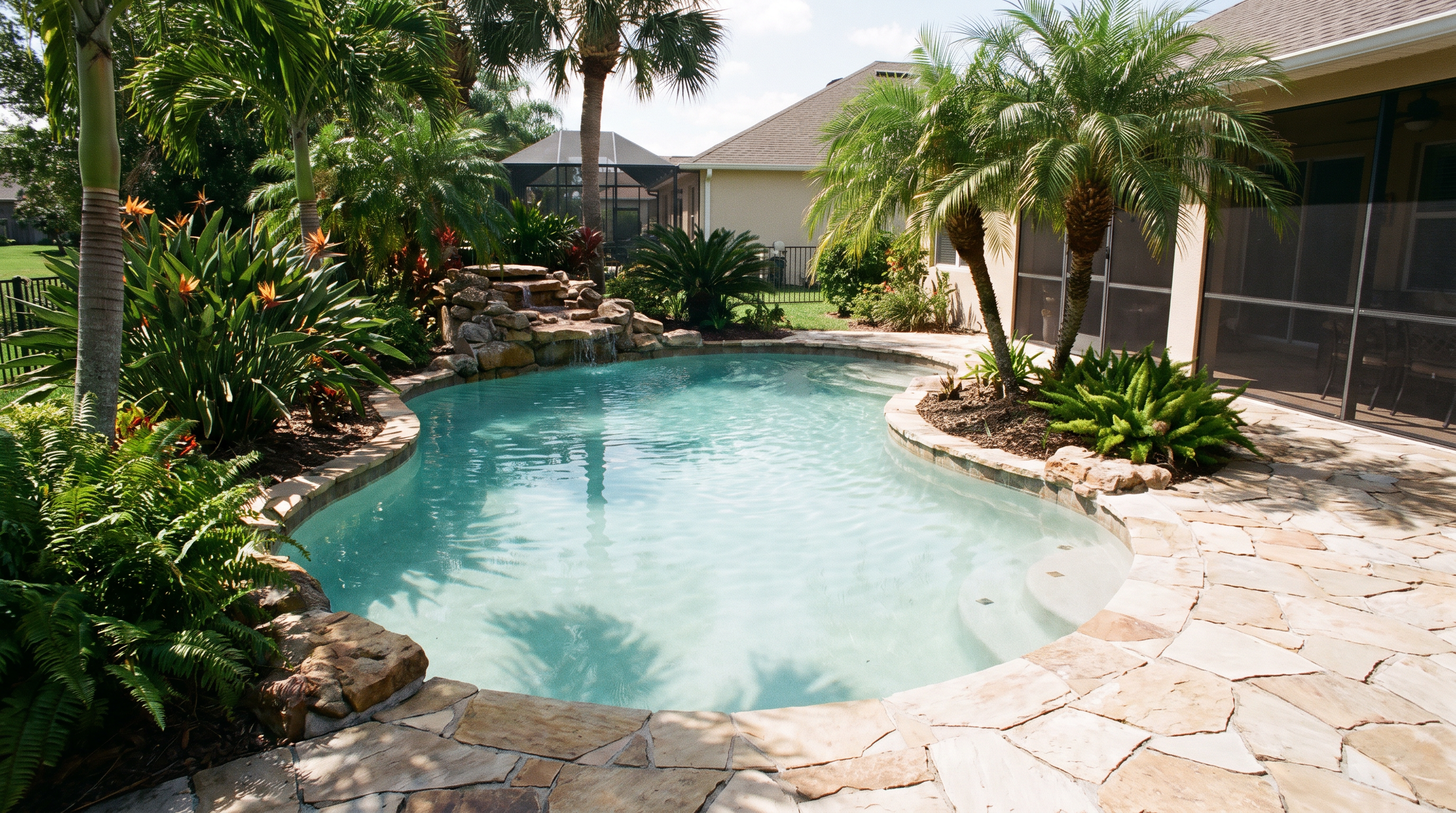
Cloudy pool water doesn't just look bad — it's a warning sign that something in your pool's chemistry or equipment is off, and in Central Florida's climate, a small imbalance can turn into a big problem faster than you'd expect.
Whether you're a homeowner who noticed the water looked a little hazy this morning or a short-term rental property manager who just got a message from a guest, this guide will walk you through exactly what causes cloudy pool water, how to figure out which problem you're dealing with, and the steps to clear it up. We'll also cover when it's time to stop guessing and call in a professional.
Why Cloudy Pool Water Is More Common in Central Florida
Florida pools face conditions that pools in most other states simply don't. If it feels like your water goes out of balance more often here, that's not your imagination — it's the environment working against you.
Heavy summer rain: Central Florida's afternoon thunderstorms dump massive amounts of water into your pool in a short period. Rain is slightly acidic, dilutes your sanitizer, and carries phosphates and organic material that feed algae and cloud the water.
Extreme heat and humidity: High temperatures cause chlorine to burn off faster than it would in a cooler climate. A pool that's balanced on Monday morning can drift into problematic territory by Wednesday afternoon in July.
Intense UV exposure: Florida's UV index is among the highest in the country. UV rays destroy free chlorine rapidly, especially if you're not using a stabilizer like cyanuric acid to protect it.
Heavy bather load: Vacation rentals, families with kids, and frequent summer use introduce sweat, sunscreen, and body oils that consume chlorine and leave behind combined chlorine (chloramines), which cloud the water and cause that familiar chemical smell.
Understanding this environment is the first step. The fix for cloudy water in Florida isn't always the same as what you'd read on a generic pool care website written for someone with a pool in Ohio.
The 5 Most Common Causes of Cloudy Pool Water
1. Low Chlorine or Chloramine Buildup
This is the most frequent culprit. When free chlorine drops too low, bacteria and organic waste accumulate and cloud the water. Just as problematic is chloramine buildup — this happens when chlorine reacts with nitrogen compounds (from sweat, urine, and rain) and forms combined chlorine. Chloramines are ineffective as a sanitizer and are a primary cause of hazy, irritating water. Your water can test positive for chlorine but still be cloudy if most of what's in the pool is combined chlorine rather than free chlorine.
2. High pH or Alkalinity
When your pH climbs above 7.8, calcium and other minerals start to come out of solution and form tiny suspended particles that scatter light and make the water look milky white. High total alkalinity often drives pH upward, so both numbers need to be in the right range — pH between 7.4 and 7.6, alkalinity between 80 and 120 ppm. In Florida, calcium hardness can also be a factor, especially in areas with hard municipal water.
3. Early-Stage Algae Growth
Algae doesn't always show up as green walls and a swamp. In the early stages, it can make your water look dull, hazy, or slightly green-tinged without being obviously green. If your water has a faint green or yellow cast rather than a pure white cloudiness, algae is likely involved. Florida's warm water temperatures make algae growth extremely aggressive — under the right conditions, it can go from invisible to full bloom in 24 to 48 hours.
4. Poor Filtration or Circulation
Your filter and pump are what physically remove suspended particles from the water. If your pump isn't running long enough, your filter is dirty, or you have dead zones with poor circulation, particles stay suspended in the water rather than getting filtered out. Sand filters that haven't been backwashed recently, cartridge filters clogged with debris, and undersized or malfunctioning pumps are all common equipment-side causes of chronic cloudiness. Learn more on our pool equipment service page.
5. Heavy Use or Rain Dilution
A single heavy rainstorm or a pool party over the weekend can dilute your sanitizer, introduce organic load, and shift your chemistry enough to cloud the water noticeably. This is an especially common issue for vacation rental pools in areas like Reunion, Davenport, and Kissimmee, where bather load is high and unpredictable.
How to Diagnose Your Cloudy Pool
Before you add anything to the pool, spend five minutes observing and testing. Here's a quick diagnostic framework:
What color is the cloudiness?
White or milky: Points to a chemistry issue — high pH, high calcium hardness, or chloramine buildup.
Green or yellow-tinged: Early algae. Treat it as an algae problem even if it looks subtle.
Brown or gray: Often indicates environmental debris or a filter that needs attention.
Does it clear overnight?
Run the pump for several hours and check the next morning. If the water is noticeably clearer after extended filtration, your equipment is working and the problem is likely chemistry-related. If it looks the same or worse, you may have an equipment issue or an active algae bloom that filtering alone won't solve.
Is your pump running properly?
Listen to the pump. Check that water is moving through the returns. Look at your filter pressure gauge — a reading significantly above normal suggests a dirty or clogged filter. These are quick checks that rule out equipment as the cause before you spend money on chemicals.
Step-by-Step: How to Clear Cloudy Pool Water
Test the water first. Always start with a proper test — either a test kit or test strips at minimum, or a professional water analysis if you want precise results. Know your free chlorine, combined chlorine, pH, alkalinity, and calcium hardness before adding anything. The CDC's guidance on pool water chemistry is a useful reference for understanding safe and effective sanitizer levels.
Shock the pool for chloramine or algae issues. If combined chlorine is the problem, shock the pool to breakpoint chlorination — typically raising free chlorine to 10 times the combined chlorine level. Use a non-stabilized shock (calcium hypochlorite) for best results. For algae, shock aggressively and brush the walls and floor before and after treatment.
Adjust pH to the 7.4–7.6 range. If high pH is contributing to cloudiness, use muriatic acid to bring it down. Don't shock the pool until pH is in range — chlorine is far less effective above pH 7.8.
Run your filter continuously for at least 24 hours. Filtration is how particles actually leave the water. Running the pump around the clock during treatment is not optional — it's essential. Backwash or clean your filter partway through if pressure builds.
Add a clarifier if needed. Pool clarifiers work by clumping tiny suspended particles together so your filter can catch them. They're a useful finishing tool but are not a substitute for fixing the underlying chemistry problem. Use clarifier after your chemistry is balanced, not before.
When to Call a Professional
Most mild cases of cloudy water can be resolved with the steps above. But there are situations where guessing becomes expensive and the problem keeps coming back. Call a professional if:
The water hasn't cleared within 24 to 48 hours after treatment
You can't see the bottom of the pool at the deep end — that's a safety issue, not just an aesthetic one
You've added chemicals and the problem keeps returning every few days
You suspect your pump, filter, or circulation system may not be performing properly
You're managing a short-term rental property and can't afford the downtime to troubleshoot
For STR property managers in particular, a cloudy pool is a direct threat to your reviews and your revenue. Guests expect a clean, clear pool — and a one-star review mentioning a green or hazy pool can follow a listing for months. Consistent, scheduled pool maintenance is the most reliable way to make sure your pool is guest-ready every week, not just when you happen to notice a problem.
Frequently Asked Questions
Can I swim in a cloudy pool?
It depends on why it's cloudy, but generally, no. If the cloudiness is from a chemistry imbalance or early algae, the water may be harboring bacteria at levels that aren't safe for swimmers. More importantly, cloudy water reduces visibility — which is a real safety risk, especially with children in the pool. Treat the problem first, then swim once the water is clear and chemistry is confirmed in range.
How long does it take to clear up cloudy pool water?
With the right treatment and continuous filtration, most chemistry-related cloudiness clears up within 24 to 48 hours. Algae-related cloudiness can take two to three days of aggressive treatment. If your water is still cloudy after 48 hours of proper treatment, there's likely an underlying equipment or chemistry issue that needs professional attention.
Why does my pool get cloudy after heavy rain?
Rain introduces phosphates, organic debris, and slightly acidic water into your pool all at once. It dilutes your sanitizer, raises water volume, and can shift your pH and alkalinity significantly in a single storm. After any heavy rain event, test your chemistry promptly and be ready to shock and rebalance — especially during Florida's summer rainy season when afternoon storms are nearly daily.
Why does my vacation rental pool keep going cloudy between guests?
High bather turnover means your pool is constantly absorbing sunscreen, sweat, and body oils that quickly deplete chlorine and create chloramines. Combined with Florida's heat and UV intensity, chemistry can drift substantially between weekly service visits. The most effective solution is a scheduled maintenance program timed around your check-out and check-in schedule, so the pool is tested and treated before each new group of guests arrives.
Get Clear Water Fast — Call The Pool Mechanic
Cloudy pool water rarely fixes itself, and in Central Florida's climate, a small problem can become a major one within a day or two. The Pool Mechanic serves homeowners and property managers across Winter Garden, Clermont, Davenport, Reunion, and the surrounding area with same-day service for water quality issues, equipment problems, and everything in between. If your pool is hazy, green-tinged, or just not right, give us a call at 407-883-0896 and we'll get it sorted out.

Comments