
Pool Plaster vs Pebble Tec vs Quartz: Best Florida Finish Guide
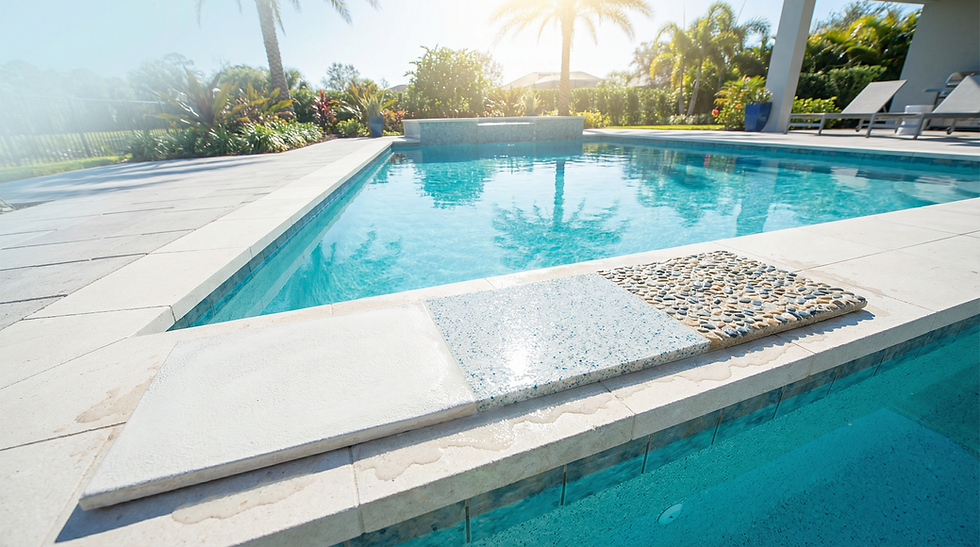
Pool plaster vs pebble tec vs quartz finishes can determine whether your Central Florida pool lasts 5 years or 25 years. With Florida's intense UV rays and hard water conditions, choosing the wrong finish costs homeowners $15,000-$30,000 in premature resurfacing.
Your pool finish affects everything: maintenance costs, swimmer comfort, and resale value. Standard white plaster might save money upfront, but pebble surfaces and quartz aggregates offer dramatically different long-term value propositions.
Standard Pool Plaster: The Budget Option
Standard white plaster remains the most common pool finish in Florida, covering roughly 60% of residential pools. This traditional cement-based surface costs $3-5 per square foot installed.
Durability in Florida Conditions: Standard plaster typically lasts 7-10 years in Central Florida before requiring replacement. The state's high calcium content and UV exposure cause faster deterioration than northern climates.
Common plaster problems include:
Calcium buildup within 2-3 years
Surface roughness from chemical imbalance
Staining from organic materials
Cracking along beam lines
Maintenance requirements stay relatively simple. Weekly brushing prevents algae buildup, and balanced water chemistry extends surface life. However, replastering costs $8,000-12,000 for average pools.
Note: White plaster shows every flaw, making regular maintenance visible to pool owners and guests.
Pebble Tec and Pebble Finishes: Premium Durability
Pebble Tec revolutionized pool finishes by combining cement with natural pebbles, creating surfaces that last 20-25 years in Florida conditions. Installation costs run $8-12 per square foot.
The textured surface provides natural slip resistance but feels rougher against bare skin. Many swimmers find the texture uncomfortable for extended contact, particularly children playing in shallow areas.
Florida Performance Advantages:
UV resistance prevents fading
Hard water causes minimal damage
Natural variations hide minor stains
Thermal mass keeps water cooler
Pebble surfaces require different maintenance approaches. The textured finish traps debris more readily than smooth surfaces, demanding more frequent brushing. However, the durability means professional pool resurfacing happens half as often compared to standard plaster.
Color options include blues, greens, grays, and earth tones. Darker colors absorb more heat but hide stains better than lighter shades.
Quartz Pool Finishes: The Middle Ground
Quartz aggregate finishes blend durability with comfort, lasting 15-18 years in Central Florida pools. Costs typically range $6-9 per square foot installed.
Unlike pebble surfaces, quartz finishes feel smooth against skin while maintaining excellent stain resistance. The crushed quartz crystals create subtle sparkle effects under pool lighting.
Maintenance Characteristics: Quartz surfaces resist algae growth better than standard plaster but require less aggressive cleaning than pebble finishes. The smooth texture allows easier debris removal during routine cleaning.
Chemical balance remains critical for all finishes, but quartz handles pH fluctuations more forgivingly than standard plaster. This tolerance reduces long-term maintenance costs for busy homeowners.
Important: Not all quartz products perform equally. Premium brands like 3M and SGM offer superior binding agents compared to generic alternatives.
Cost Analysis: 20-Year Ownership
Total ownership costs reveal surprising differences between finish types:
These calculations assume 400 square foot pool surface area and include removal costs for replacement installations.
Florida-Specific Performance Factors
Central Florida's climate creates unique challenges that affect finish performance differently.
UV Exposure: Florida receives 25% more UV radiation than northern states according to the National Weather Service. Standard plaster fades and chalks within 3-4 years, while pebble and quartz finishes maintain appearance longer.
Hard Water Impact: Orange County and surrounding areas have calcium hardness levels of 200-400 ppm. This mineral content causes faster scaling on smooth plaster surfaces compared to textured alternatives.
Seasonal temperature swings, though mild, cause thermal expansion that cracks brittle plaster faster than flexible aggregate finishes.
Our experience with pool renovation projects shows pebble and quartz surfaces handling Florida conditions with minimal degradation over decades.
Comfort and Usability Differences
Surface texture dramatically affects swimming experience, particularly for families with children.
Standard plaster offers the smoothest feel but becomes rough as calcium deposits accumulate. Regular acid washing restores smoothness but reduces overall lifespan.
Pebble finishes provide excellent traction for pool entry and exit but can scrape skin during active swimming. Pool volleyball, wrestling, and sliding games become less comfortable on textured surfaces.
Quartz strikes the best balance for active families. The smooth finish allows comfortable swimming while providing adequate grip around pool edges and steps.
Resale Value Impact
Pool finish choice significantly affects home resale value in Florida's competitive real estate market.
Real estate appraisers typically add $2,000-4,000 value for premium finishes on comparable properties. However, they deduct similar amounts for pools requiring immediate resurfacing.
Buyers increasingly recognize quality finishes as indicators of overall pool maintenance. Homes with recently installed pebble or quartz surfaces sell faster than properties with aging plaster, according to local Clermont pool resurfacing market data.
The Pool Mechanic's Recommendation
For most Central Florida homeowners, quartz aggregate offers the best overall value. The 15-18 year lifespan, combined with smooth texture and moderate cost, suits families prioritizing both durability and comfort.
Choose pebble finishes when:
Maximum lifespan justifies higher upfront cost
Pool primarily serves adult swimmers
Natural appearance complements landscape design
Standard plaster works for:
Investment properties with tight budgets
Pools requiring resurfacing within 5-7 years anyway
Homeowners planning major renovations
Our team has installed hundreds of pool finishes across Reunion, Clermont, and surrounding areas. We've seen how different materials perform in real Florida conditions over multiple decades.
Common Mistakes That Reduce Finish Lifespan
Ignoring startup procedures: New finishes require 30-60 days of careful water chemistry management. Rushing this process causes permanent damage.
Using automatic pool cleaners too early: Abrasive cleaners damage fresh surfaces. Wait 60 days minimum before introducing suction or pressure cleaners.
Acid washing too frequently: Aggressive cleaning removes surface material. Limit acid washing to once every 3-5 years maximum.
Ignoring water balance: High pH levels cause scaling, while low pH dissolves cement binders. Test water weekly and adjust immediately.
Choosing finish based on price alone: Installation quality matters more than material cost. Poor workmanship ruins even premium finishes.
Skipping professional consultation: Local water conditions affect finish performance. Professional assessment prevents costly mistakes.
Ready to resurface your pool with the right finish for Florida conditions? Contact The Pool Mechanic for a detailed assessment of your specific situation and water chemistry needs.
Choose the Right Pool Finish in Central Florida Today
Don’t gamble on the wrong surface and pay for premature resurfacing. Whether you’re deciding between plaster, quartz, or pebble, The Pool Mechanic can inspect your pool, explain the real tradeoffs for Florida water and UV exposure, and recommend the best finish for your budget and comfort.
Request your resurfacing consultation or call 407-883-0896 for fast, local service in Central Florida.
Frequently Asked Questions
How long does pebble tec last compared to regular plaster?
Pebble Tec typically lasts 20-25 years in Florida conditions, while standard plaster requires replacement every 7-10 years. The aggregate surface resists UV damage and chemical imbalance better than cement-only finishes.
Is quartz pool finish worth the extra cost over plaster?
Quartz finishes cost 50-80% more than standard plaster but last twice as long with lower maintenance requirements. Over 20 years, quartz actually costs less per year than repeatedly replastering.
What pool finish is best for Florida's hard water?
Pebble and quartz finishes handle Florida's high calcium content better than standard plaster. The textured surfaces hide mineral deposits, and aggregate materials resist scaling damage from hard water.
Do pebble pool finishes hurt your feet?
Pebble finishes feel rougher than plaster, particularly on sensitive skin. Most swimmers adapt quickly, but children and elderly users may find the texture uncomfortable for extended contact during play.
How much does it cost to resurface a pool in Central Florida?
Pool resurfacing costs range from $8,000 for basic plaster to $15,000+ for premium pebble finishes on average-sized pools. Costs vary based on surface area, access difficulty, and chosen material quality.
Can you change from plaster to pebble tec during resurfacing?
Yes, pools can switch from any existing finish to pebble or quartz during resurfacing. The old surface must be completely removed and the pool structure properly prepared for the new aggregate material.


Comments