
Pool Inspection in Florida: What Home Buyers Need to Know Before Closing
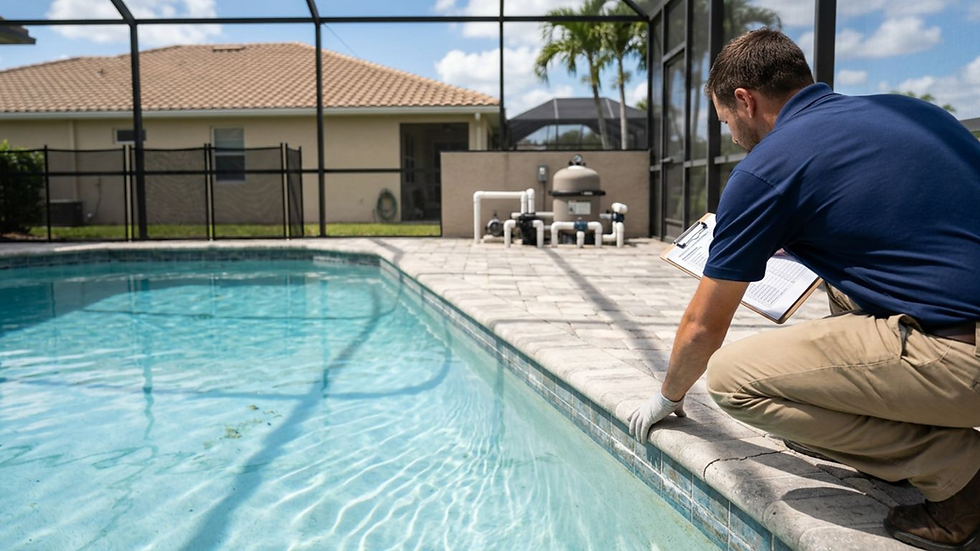
Most home buyers in Central Florida spend weeks obsessing over the kitchen countertops and the roof age — then treat the pool like a bonus feature they’ll figure out later. That “figure it out later” moment has a price tag, and in Florida, it can run anywhere from a few hundred dollars to well over $20,000. A proper pool inspection before closing is one of the smartest moves a buyer can make, and surprisingly, one of the most skipped.
Why Pool Inspections Matter More in Florida Than Anywhere Else
Florida pools are not seasonal amenities. They run twelve months a year, which means every component — pump, filter, heater, surface, decking — accumulates wear at a pace that pools in colder climates simply don’t. Add in Florida’s intense UV exposure, summer heat that pushes water temperatures into the upper 80s and 90s, hard water mineral deposits, and the salt systems common in newer builds, and you have conditions that age pool equipment and surfaces faster than average.
Central Florida specifically — the Winter Garden, Davenport, Clermont, Kissimmee, and Reunion corridor — has one of the highest rates of residential pool ownership in the country. Many of these pools were built during the 1990s and early 2000s construction boom. That means a significant portion of the existing housing stock has plaster surfaces that are at or approaching the end of their useful life. A pool that looks clean in listing photos can be hiding delaminating plaster, a pump on its last legs, or a slow structural leak that hasn’t made it into the seller’s disclosure.
In the vacation rental corridor around Davenport, Kissimmee, and Reunion, pools also absorb heavier-than-average use. Short-term rental properties with pools that “sleep 12” are running their equipment hard, often with guests who don’t report issues and maintenance that may have been deferred between bookings. Buyers purchasing in that market need to be especially thorough.
What a Pool Inspection Actually Covers
A general home inspector will walk around the pool deck, note obvious cracks, and check that the pump turns on. That’s not a pool inspection — that’s a glance. A licensed pool contractor or certified pool inspector performs a structured evaluation of every major system. Here’s what should be on the checklist.
Shell and Surface Condition
The inspector examines the plaster, pebble, or tile interior surface for cracks, staining, delamination (plaster separating from the shell in sheets or bubbles), and rough texture that indicates chemical erosion. Surface failure is the single most expensive finding in a pool inspection — replastering or resurfacing a standard residential pool in Central Florida typically runs $8,000 to $20,000 depending on the finish selected and the scope of prep work required. Tile and coping along the waterline are also checked for missing pieces, cracked grout, and calcium deposits that indicate long-term water chemistry neglect.
For a detailed breakdown of what surface replacement actually involves and costs in this market, our complete guide to pool resurfacing costs in Central Florida covers every finish option and what drives the price up or down.
Equipment Pad: Pump, Filter, Heater, and Automation
The equipment pad is where most of the money lives. The inspector checks the pump for age, noise, seal condition, and flow rate. A pump that’s more than eight to ten years old in Florida is a replacement candidate regardless of how it looks. Variable-speed pumps are now required by Florida energy code on new builds, but older properties may still be running single-speed units that are both less efficient and near end of life.
Filter type and condition matter too. Sand filters need media replacement every five to seven years. Cartridge filters need regular cleaning and eventual cartridge replacement. DE (diatomaceous earth) filters are the most effective but also require the most maintenance — an inspector will flag if the grids are worn or damaged. If the property has a heater, the inspector checks for limescale buildup in the heat exchanger, igniter function, and overall condition. Heater repairs or replacements can run $200 to $3,500 depending on the failure and unit type. Any automation or timer systems are also tested for proper function.
Leak Detection: Visual and Structural
A thorough inspection includes a visual check for signs of leakage: saturated soil around the equipment pad, visible cracks in the shell at or below the waterline, and evidence of water loss at fittings, returns, and skimmer baskets. A formal pressure test of the plumbing lines may be recommended as a follow-up if there’s reason to suspect an underground leak.
Leaks in Florida pools often go unnoticed longer than they should because owners assume water loss is from evaporation — which is genuinely high here. If you want to know what early signs of a pool leak look like before you bring in a professional, the post on how to spot pool leaks before they become expensive repairs walks through what to look for during a walkthrough. For anything beyond the visual, professional pool leak detection uses pressure testing and dye testing to pinpoint the exact source.
Electrical: Bonding and GFCI Protection
This is the inspection component buyers most often underestimate, and it’s potentially the most serious. Florida requires proper bonding of all pool equipment, lighting, and metallic components to prevent voltage from building up in the water — a condition called “electric shock drowning” that has caused deaths. The inspector checks that the bonding grid is intact, that GFCI breakers are present and functional, and that underwater lighting meets code. Electrical deficiencies are non-negotiable safety issues, not cosmetic line items to defer.
For reference on Florida’s pool electrical and bonding requirements, the Florida Building Code outlines the specific standards that licensed pool contractors are required to follow on all installations and repairs.
Pool Decking
The inspector checks the concrete or paver deck for cracking, settling, and drainage slope. Water should drain away from both the pool shell and the home’s foundation. Deck settling can indicate soil movement underneath — common in Central Florida where sandy soils shift — and in some cases points toward a subsurface leak that has been eroding the base material over time.
Safety Fencing and Barriers
Florida law requires a four-foot barrier around all residential pools to prevent unsupervised child access. This is not optional and not negotiable for buyers with children. The inspection should verify that the barrier is compliant, that self-latching gates function correctly, and that there are no gaps or climb-over points that would fail a code inspection. Missing or inadequate fencing is one of the most common findings in Central Florida pool inspections, and it shows up frequently on properties where the original fence was never installed correctly or has deteriorated over time.
What Does a Pool Inspection Cost?
In Central Florida, a standalone pool inspection by a licensed pool contractor or certified inspector typically runs $150 to $300. Some general home inspection packages include a basic pool check, but the level of detail rarely matches what a pool-specific professional provides. Given that the findings could reveal $10,000 or more in necessary repairs, the inspection fee is the most cost-effective money a buyer can spend in the entire transaction.
The inspector’s report should be written, itemized, and specific enough to be used in negotiations. A verbal summary is not enough.
The Most Common Findings in Central Florida Pool Inspections
Plaster delamination or worn surface: Extremely common in homes built before 2005. Resurfacing cost: $8,000–$20,000.
Aging pump or filter: Single-speed pumps over ten years old, sand filters past their media replacement window. Replacement cost: $500–$2,500.
Minor leaks at fittings or skimmer: Often simple repairs but worth quantifying. Repair cost: $300–$800 depending on access and scope.
Missing or non-compliant pool fencing: A code violation that must be corrected. Installation cost varies by property layout.
Heater failure or limescale buildup: Heat exchangers are especially vulnerable to Central Florida’s hard water. Repair or replacement: $200–$3,500.
How to Use Inspection Findings in Negotiations
A written, itemized pool inspection report is a negotiating document. If the inspector finds $12,000 in legitimate deferred maintenance — a surface near end of life, an aging pump, and a minor skimmer leak — that is a documented, specific basis for requesting a seller credit or price reduction. Sellers who have lived with a pool for ten years often genuinely don’t know what they have. A professional report removes the subjectivity from the conversation.
The best approach is to get repair estimates alongside the inspection report so you’re negotiating with real numbers, not ranges. Many buyers request two or three quotes from local pool contractors before finalizing their ask.
What Happens If You Skip the Inspection
The scenario plays out often enough that pool contractors in Central Florida have a shorthand for it: the new buyer calls three weeks after closing because the pool has turned green, the pump is making a grinding noise, and there are obvious cracks along the waterline they didn’t notice during the walkthrough. When they finally get a professional out to assess everything at once, they’re looking at a resurfacing job, a pump replacement, and a leak repair — all simultaneously, with no negotiating leverage and no seller to call.
The pool didn’t fail overnight. The signs were there before closing. A $200 inspection would have put them in a very different position.
Frequently Asked Questions
Can a general home inspector evaluate a pool in Florida?
Technically yes, but the depth of evaluation is usually limited. Most general home inspectors check that the pool has water, the pump turns on, and the deck has no obvious hazards. They are not trained to assess plaster condition, perform pressure tests on plumbing, evaluate equipment age and efficiency, or verify electrical bonding compliance. For a meaningful pre-purchase assessment, a licensed pool contractor or certified pool inspector is the right call.
Does the seller have to disclose pool problems in Florida?
Florida law requires sellers to disclose known material defects, which includes known pool issues. However, “known” is the key word — sellers can only disclose what they’re aware of. A pool surface that is technically failing but hasn’t visibly cracked yet may not trigger a disclosure. Deferred maintenance that the seller has simply ignored may not be flagged. A buyer-commissioned inspection closes that gap regardless of what appears on the disclosure form.
How long does a pool inspection take?
A thorough pool inspection by a qualified professional typically takes one to two hours for a standard residential pool. Larger pools, pools with extensive equipment, or properties where something suspicious warrants closer investigation may take longer. The written report is usually delivered within 24 to 48 hours and should include photos of any deficiencies found.
Is a pool inspection worth it if the pool looks new?
Yes — and in some ways it matters more. A pool that has been recently resurfaced or had equipment upgraded is likely in better shape, but the quality of that work is not guaranteed just because it looks clean. An inspector can tell whether a fresh plaster job was done correctly, whether replacement equipment was installed to code, and whether electrical and bonding work was performed by a licensed contractor. A pool that looks new is still worth verifying before it becomes your responsibility.
Get a Pool Assessment Before You Close
If you’ve received a pool inspection report and need repair quotes, or you want a professional opinion on a pool before you make an offer, The Pool Mechanic is available throughout Central Florida. Our team handles everything from pool equipment repair and structural fixes to full resurfacing projects, and we can give you a straightforward assessment of what you’re actually buying. We serve Winter Garden, Davenport, Clermont, Kissimmee, Reunion, and Celebration. Call us at 407-883-0896 to schedule a pool evaluation — before closing is the right time to know what you’re getting into.

Comments