
Mustard Algae in Pool: Identify & Treat It for Good
Updated: 5 days ago
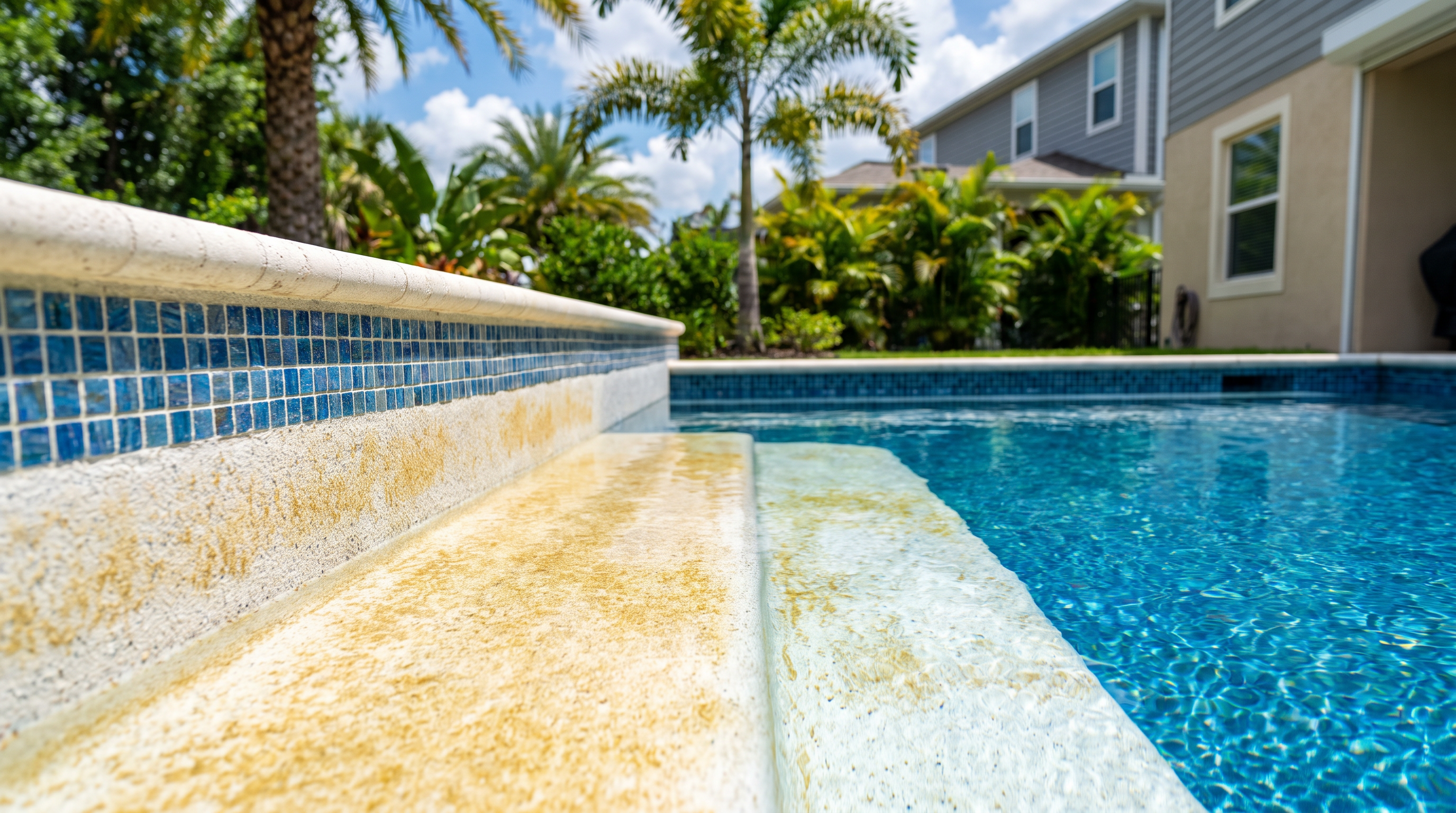
Mustard algae in pool water shows up as a dusty, yellow-brown film clinging to walls and steps, and it laughs at the chlorine levels that would wipe out ordinary green algae in a day. Central Florida pool owners see this most often in late summer, when water temperatures sit in the mid-80s and afternoon storms dilute chemical levels faster than anyone expects. If you have shocked your pool twice already and the yellow film is still there by morning, you are not doing anything wrong — you are just fighting the wrong algae with the wrong dose.
Mustard algae, sometimes called yellow algae, is a chlorine-resistant strain that behaves differently from the green algae most swimming pool guides talk about. It grows in shaded, low-circulation areas first, clings tightly to surfaces instead of floating free, and can survive standard chlorine shock treatments that would erase common algae blooms. Understanding the difference matters because treating mustard algae like green algae almost always fails, and that failure trains pool owners to think their pool has some deeper, unsolvable problem when the real issue is just an under-dosed shock.
How to Identify Mustard Algae in Your Pool
Mustard algae has a few tells that separate it from green algae, pollen, or sand at the bottom of the pool. It typically appears as a yellowish-brown, sandy-looking coating rather than a cloudy green tint in the water itself.
It tends to colonize shaded corners, behind ladders, under steps, and along the shallow-end walls where sunlight and circulation are weakest. Brush it and it will come off the surface easily, but it often reappears within hours because spores remain embedded in pool equipment, swimsuits, and toys.
A simple test many pool professionals use: brush a small patch, then check it again in two to three hours. If the same spot looks dusted with yellow again despite normal chlorine levels, that is a strong sign of mustard algae rather than pollen or debris that would not regrow on its own.
Why Mustard Algae Resists Normal Chlorine Levels
Mustard algae has a thicker outer coating than green algae, which lets it tolerate chlorine concentrations that would kill green strains within hours. Pools sitting at a standard 1-3 ppm free chlorine range often see no improvement at all, because that level barely stresses the algae rather than eliminating it.
Low or unstable pH compounds the problem. If pH sits outside the 7.2-7.6 range, even a heavy shock loses much of its killing power, letting mustard algae rebound within a day or two of treatment.
Poor circulation is the third factor. Mustard algae favors dead zones — behind ladders, in corners, near skimmer edges — where chlorinated water barely reaches. Pools with a struggling pump or a clogged filter almost always show recurring outbreaks in the same low-flow spots, which is one reason our pool equipment repair technicians check circulation before recommending any chemical treatment.
Step-by-Step Treatment for Mustard Algae
Treating mustard algae in pool water correctly requires a higher chlorine dose than a standard green algae shock, along with mechanical scrubbing to break the algae's grip on surfaces.
Test and balance water first. Bring pH to 7.2-7.4 and alkalinity to 80-120 ppm before shocking. Chlorine cannot do its job efficiently outside this range.
Brush every affected surface. Use a stiff pool brush on walls, steps, ladders, and corners to break up the algae layer before adding chemicals. Skipping this step is the single biggest reason mustard algae treatments fail.
Shock at double or triple the standard dose. Mustard algae typically requires 2-3 times the chlorine dose used for green algae — often in the range of 3-5 pounds of shock per 10,000 gallons, depending on how established the bloom is.
Add an algaecide formulated for mustard or yellow algae. Not all algaecides work on this strain; check the label specifically.
Run the pump continuously for 24-48 hours. Circulation carries chemical treatment to every corner of the pool and prevents new colonies from forming in dead zones.
Brush again the following day, then vacuum and backwash the filter. Dead algae settles to the floor and clogs filter media, so a second brushing and a full filter cleaning are not optional steps.
Scrub or replace anything porous that touched the water. Swimsuits, pool toys, brushes, and vacuum heads can all carry mustard algae spores back into a clean pool within days.
Tip: Treat pool equipment and accessories at the same time as the water. A single overlooked pool noodle or brush head is enough to reintroduce mustard algae a week after a successful shock.
Common Mistakes That Let Mustard Algae Come Back
Under-shocking the pool: Using a standard green-algae dose leaves enough live algae to rebuild the colony within days.
Skipping the brush step: Chlorine alone struggles to penetrate the algae's protective coating without physical agitation first.
Ignoring pH and alkalinity: Shocking an unbalanced pool wastes most of the chlorine's killing power before it reaches the algae.
Forgetting the filter: A filter loaded with dead algae debris reseeds the pool with spores the moment the pump kicks back on.
Not treating swimwear and toys: Spores hiding in fabric or plastic are the most common reason mustard algae returns within a week or two.
Stopping treatment too early: The film can look gone within 24 hours while spores remain; a second brush-and-shock cycle two to three days later catches what the first round missed.
Why Mustard Algae Is a Bigger Problem for Rental Pools
Short-term rental pools face a specific version of this problem: guests come and go, pool toys and floats move between properties, and cleaning schedules sometimes get pushed to fit around checkout times. Every one of those factors increases the odds of spores hitching a ride into your pool.
Property managers juggling multiple pools across Reunion, Davenport, and the Four Corners area often notice mustard algae hitting the same unit repeatedly, which usually points to a shared circulation issue or contaminated equipment being reused across properties. Our team's short-term rental pool service includes spore-source checks specifically because a one-time treatment does not solve a recurring problem tied to shared equipment or guest turnover.
HOA and community pools carry a similar risk profile due to higher bather loads and shared pool furniture. For those properties, our HOA pool maintenance program builds mustard algae checks into routine service visits rather than waiting for a visible outbreak.
Preventing Mustard Algae From Returning
Maintaining free chlorine at the higher end of the recommended range (3-4 ppm rather than 1-2 ppm) during Florida's hot months gives mustard algae less opportunity to establish itself in the first place. The Centers for Disease Control and Prevention recommends verifying chlorine and pH with test strips at least twice a week for residential pools, more often for high-use pools.1
Brushing walls and corners weekly, even when no algae is visible, disrupts spores before they can colonize a surface. Running the pump on a longer daily cycle during peak summer heat also reduces the low-flow dead zones mustard algae depends on.
The Pool & Hot Tub Alliance recommends professional water balance checks at least monthly for residential pools experiencing recurring algae issues, since do-it-yourself test kits can drift out of calibration over time.2 Consistent weekly service through our pool cleaning program catches early-stage mustard algae before it spreads far enough to require a full shock treatment.
Schedule Your Mustard Algae Treatment in Clermont Today
A pool that keeps growing yellow film despite your best chlorine efforts is frustrating, and it usually means the underlying cause — weak circulation, an under-dosed shock, or contaminated equipment — hasn't actually been fixed. Our technicians diagnose the exact strain, check your equipment and circulation, and apply the correct dose the first time so you're not fighting the same bloom every other week. We serve Clermont, Winter Garden, Davenport, Reunion, Celebration, and the Four Corners area with same-day diagnosis available.
Request your free quote or call 407-833-0896 for fast, local service in Clermont.
Frequently Asked Questions
Why won't my chlorine kill mustard algae?
Mustard algae has a thicker protective coating than green algae, which lets it tolerate standard chlorine levels of 1-3 ppm. It typically requires a shock dose two to three times higher than what kills green algae, along with brushing to break down its surface layer.
How long does it take to get rid of mustard algae?
Most pools clear visibly within 24-48 hours of a proper shock and brush cycle, but full elimination — including filter cleaning and treating swimwear and toys — usually takes 3-5 days to prevent spores from regrowing.
Can mustard algae make you sick?
Mustard algae itself is not typically classified as a health hazard the way bacteria like E. coli are, but it can host bacteria and reduce water clarity, and a pool with active algae growth should not be used for swimming until treated.
Is mustard algae the same as yellow algae?
Yes, mustard algae and yellow algae refer to the same chlorine-resistant strain. Some sources also call it "yellow-green algae," but the identification and treatment approach are the same regardless of the name used.
Why does mustard algae keep coming back after I treat it?
Recurring mustard algae almost always traces back to one of three causes: spores hiding in pool toys or swimwear, an under-cleaned filter reseeding the water, or a circulation dead zone that never got fully treated during the shock cycle.
Do I need a professional to treat mustard algae?
Many pool owners can clear a first-time mustard algae outbreak with a proper high-dose shock and thorough brushing. Recurring cases usually mean an underlying circulation or equipment issue that a professional diagnosis can identify faster than repeated trial-and-error shocking.


Comments