
Black Algae in Pool: How to Kill It for Good
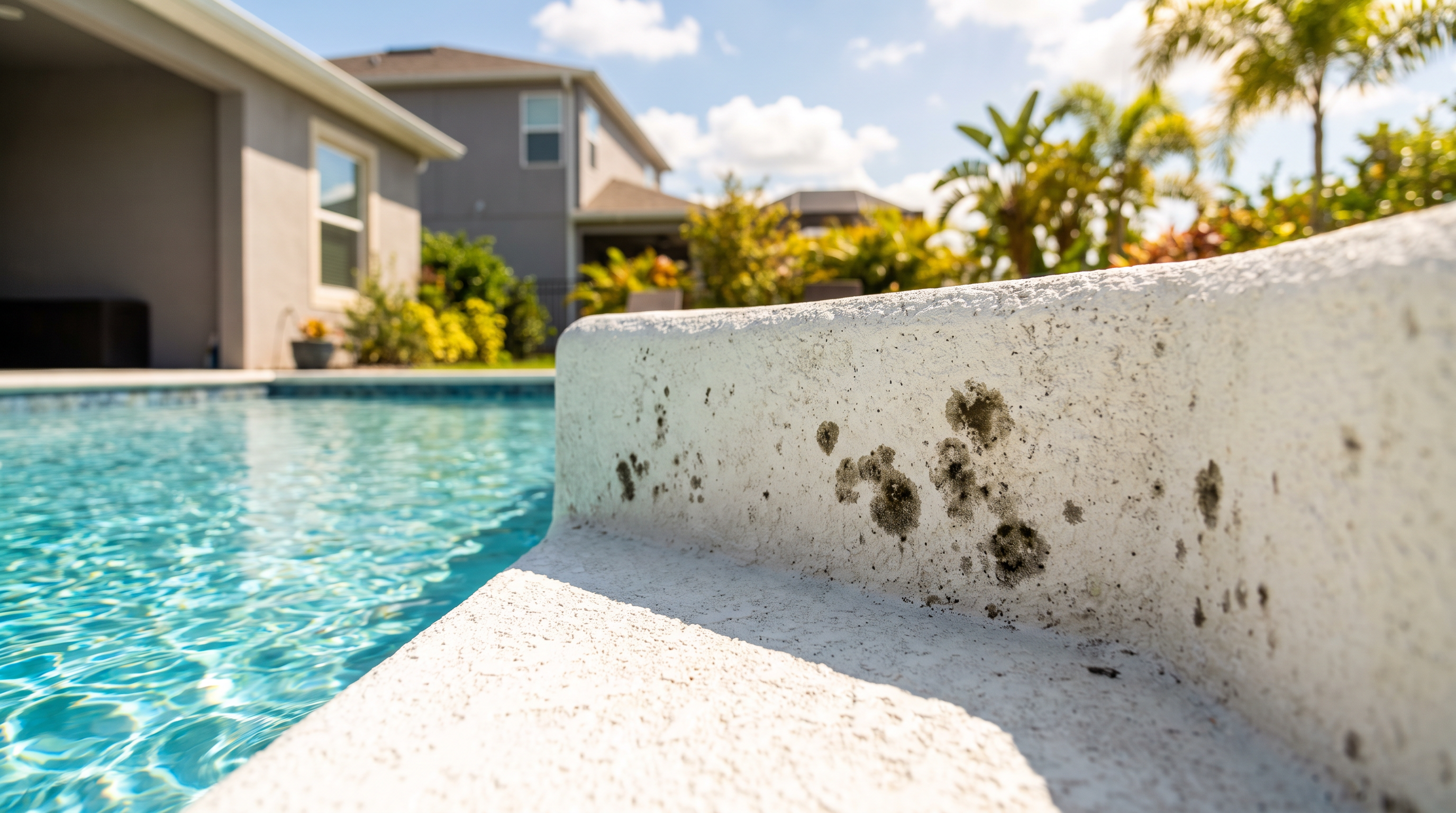
Black algae in pool plaster can survive chlorine levels that would kill nearly anything else in the water, which is exactly why so many Central Florida homeowners scrub the same dark spots every weekend without ever getting rid of them. If you've brushed a stain until your arm ached, shocked the pool three times in a month, and watched the same black or blue-green dots reappear a week later, you're not doing anything wrong — you're just fighting an organism that's built to outlast standard treatment. This guide covers what actually kills it, why mustard algae often gets confused with it, and when it's time to stop DIY-ing and call in equipment that can finish the job.
What Black Algae Actually Is
Black algae isn't a single species — it's typically a cyanobacteria colony that behaves like algae but grows more like a tiny fortress. Each spot develops a protective outer layer along with root-like structures that dig into pool plaster, gunite, and even tile grout lines. That's the part most pool owners never see: what looks like a surface stain is anchored below the surface, which is why brushing alone barely dents it.
The spots usually show up as small, raised, blue-black or dark green dots clustered in shaded areas, near steps, behind ladders, or in corners with slower water circulation. They feel gritty or bumpy to the touch, unlike regular algae, which wipes away as a slick film. If you run your hand across a spot and it feels like sandpaper instead of slime, that's your confirmation.
Why Chlorine Alone Never Finishes the Job
Standard chlorine levels (1–3 ppm) do almost nothing to black algae because the protective layer blocks chlorine from reaching the living cells underneath. Even shocking to 10 ppm often only kills the exposed surface layer while the anchored roots survive untouched. Within days, the colony regrows from the same spot — which explains why so many homeowners feel like they're stuck in a loop of shock, wait, reappear, repeat.
The Centers for Disease Control and Prevention notes that chlorine-resistant organisms are one of the most persistent challenges in pool water management, and cyanobacteria-type algae fall squarely into that category. (CDC) Killing it requires breaking the protective barrier mechanically first, then hitting the exposed organism with a high enough chlorine concentration to actually penetrate.
Black Algae vs. Mustard Algae vs. Green Algae
Not every stubborn stain is black algae, and treating the wrong type wastes time and chemicals. Here's how to tell them apart before you start.
Black Algae
Dark blue-black or near-black spots, raised and gritty, anchored deep in plaster or grout. Resistant to normal chlorine levels and typically found in shaded, low-circulation areas.
Mustard Algae
Yellow-brown or olive-colored patches that look like sand or dirt on the pool floor and walls, often mistaken for a dirty pool rather than an algae problem. Mustard algae also resists standard chlorine and clings stubbornly to pool toys, swimsuits, and cleaning equipment — meaning it can reintroduce itself even after a full treatment if gear isn't disinfected too.
Green Algae
The most common and easiest to treat — a slick, free-floating film that clouds the water and responds well to shock treatment and normal brushing within 24–48 hours.
Both black and mustard algae need the same core approach: mechanical disruption plus sustained high chlorine, not just a single shock dose.
The Treatment Sequence That Actually Works
Killing black algae is a process, not a single product. Skipping steps — especially brushing — is the single biggest reason DIY treatment fails.
Test and balance water chemistry first. pH between 7.2–7.6 lets chlorine work far more effectively; algaecide and shock are wasted if pH is off.
Brush every visible spot aggressively. Use a stainless steel brush on plaster and gunite (never on vinyl liners or fiberglass) to break the protective coating and expose the organism underneath.
Shock the pool to a breakpoint level — often 3 to 5 times the normal free chlorine reading — so chlorine can actually reach the exposed cells.
Apply a algaecide formulated for black or mustard algae directly to affected spots, not just broadcast across the pool.
Run the filter continuously for 24–48 hours to circulate treated water and pull dead algae and debris out of the system.
Brush again the next day, then repeat the shock-and-brush cycle for 2–3 more days until spots stop returning.
Clean or backwash the filter thoroughly afterward — algae spores trapped in a dirty filter are a common reason black algae comes right back within a week.
Pools with worn or porous plaster are far harder to fully clear because the algae has more surface area to root into. If brushing reveals rough, pitted, or chalky plaster rather than a smooth surface, the stains may keep returning no matter how aggressively you treat them until the surface itself is addressed.
Why Central Florida Pools Are Especially Prone to This
Heat, humidity, and heavy rainfall create close to ideal conditions for algae growth across Clermont, Winter Garden, Davenport, and the rest of Central Florida. Warm water accelerates algae reproduction, and summer thunderstorms regularly dilute chlorine levels and introduce organic debris and windblown spores into the water.
Short-term rental and vacation pools face an added risk factor: inconsistent bather load and gaps between cleanings when a property sits vacant between guests. A pool that goes untreated for even five or six days during a Florida summer can develop visible algae growth, which is one reason property managers increasingly schedule weekly pool cleaning and maintenance rather than relying on guests or cleaning crews to catch problems early.
Shaded pools under mature oak canopies or surrounded by tall landscaping tend to run into black algae more often too, since reduced sunlight and circulation give the colony a stable environment to establish itself.
Common Mistakes That Let Black Algae Come Back
Skipping the brush step: Chemicals alone rarely penetrate the protective coating without mechanical disruption first.
Under-shocking the pool: A single standard shock dose often isn't strong enough to reach breakpoint chlorination.
Not cleaning the filter afterward: Trapped spores in a dirty filter reintroduce algae within days.
Ignoring pool toys and equipment: Brushes, vacuum heads, and pool toys can carry algae spores between treatments if not disinfected.
Treating symptoms instead of circulation issues: Dead spots with weak flow keep regrowing algae even after a successful treatment cycle.
Waiting too long to call for help: Algae embedded in pitted or aging plaster often needs professional-grade treatment or resurfacing to fully resolve.
Schedule Professional Black Algae Removal in Clermont Today
Recurring black algae, cloudy water after every rain, and a filter that never seems to keep up are signs your pool needs more than another round of shock and brushing. The Pool Mechanic handles stubborn algae outbreaks, worn plaster that keeps hosting new growth, and the ongoing pool cleaning in Clermont that keeps it from coming back, whether it's a family backyard pool or a short-term rental between bookings.
Request your free quote or call 407-883-0896 for fast, local service in Clermont.
Frequently Asked Questions
What kills black algae in a pool fast?
Brushing to break the protective coating, followed by a breakpoint chlorine shock and a targeted algaecide application, is the fastest combination that actually reaches the organism. Repeating the cycle for 2–3 days clears most cases entirely.
Why does black algae keep coming back after I treat it?
Usually one of three things: the filter wasn't cleaned after treatment and spores recirculated, the brushing didn't fully break the protective layer, or the underlying plaster is pitted enough to keep hosting new growth.
Is mustard algae the same as black algae?
No. Mustard algae is yellow-brown and looks more like dirt or sand on pool surfaces, while black algae forms raised, gritty dark spots. Both resist standard chlorine levels and need the same brush-shock-treat approach, but mustard algae also spreads easily through contaminated pool toys and swimsuits.
Can I use regular pool shock on black algae?
Standard shock doses rarely reach the concentration needed to penetrate black algae's protective coating. A stronger, breakpoint-level shock combined with mechanical brushing is usually necessary to get results.
How long does it take to get rid of black algae in a pool?
Most cases clear within 3–5 days of consistent brushing, shocking, and filtration, but heavily established colonies embedded in older or porous plaster can take longer and may require professional treatment.
Does black algae mean I need to resurface my pool?
Not always. Surface-level infestations usually respond to a thorough treatment cycle. But if the plaster is already rough, chalky, or pitted in multiple areas, algae will likely keep returning until the surface is repaired or replaced.


Comments