
Black Algae in Pool: Why It Returns & How to Kill It
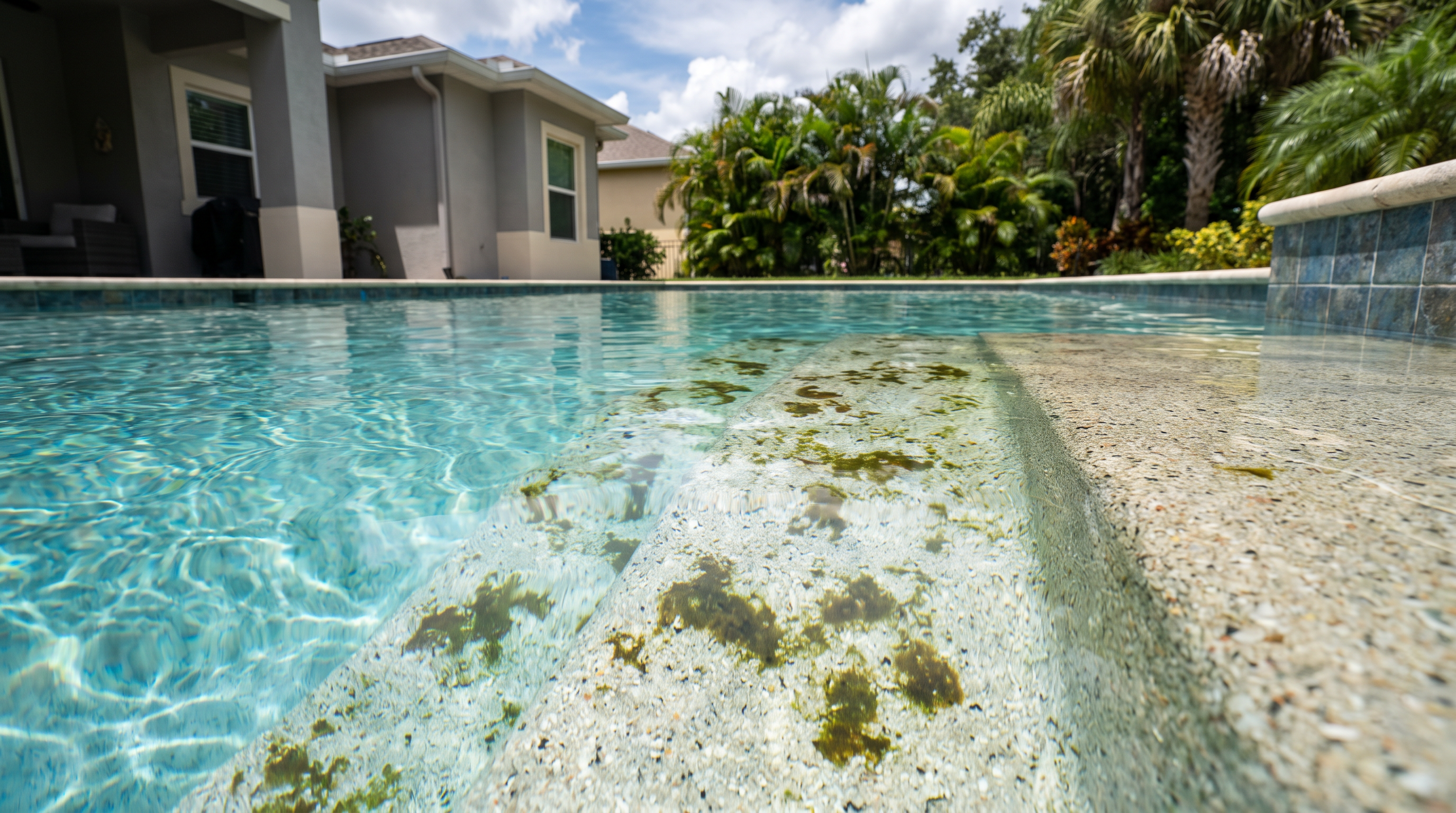
Black algae in pool surfaces can survive a chlorine shock strong enough to kill nearly everything else living in the water. That's the part most pool owners never expect. You dump in a double dose of shock, the water looks clear the next morning, and two weeks later those same dark spots are back on the step or in the corner by the light fixture.
Central Florida's warm water, heavy rain, and near-constant sun create close to perfect conditions for black algae to take hold and spread. If you've been scrubbing, shocking, and still losing the fight, the problem usually isn't the amount of chemical you're using. It's the approach.
What Is Black Algae, and Why Is It So Hard to Kill?
Black algae (technically a type of cyanobacteria, not a true algae) forms as small, raised, blue-black or dark green spots that root into pool plaster, grout lines, and rough concrete. Unlike green algae, which floats freely in the water column, black algae grows a protective outer layer and sends roots down into the pool surface itself.
That root system is the whole problem. Chlorine kills what it touches on contact, but it can't penetrate the waxy, layered coating black algae builds around its cells. The visible spot on the surface is really just the tip of a colony anchored below it.
It tends to show up first in low-flow areas: steps, corners, behind ladders, around return jets, and anywhere the water doesn't circulate well. Textured plaster, pebble finishes, and grout between pool tile give it more surface area to grab onto than smooth fiberglass or vinyl.
Black Algae vs. Mustard Algae: How to Tell the Difference
Pool owners often confuse black algae with mustard algae, but they behave very differently and need different treatment.
Mustard algae appears as a yellow-brown, sandy film, usually on shaded walls or the shallow end. It brushes off fairly easily and doesn't have the same rooted structure as black algae, but it's notoriously chlorine-resistant and loves to hide in swimsuits, floats, and pool toys, which is how it keeps reintroducing itself after a treatment.
Black algae, by contrast, feels gritty and doesn't wipe away with a light touch. If a dark spot survives a firm rub with your thumb and reappears in the same exact location within days, you're dealing with black algae, not mustard algae or ordinary dirt staining.
Why Chlorine Shock Alone Won't Get Rid of Black Algae
Shocking the pool raises free chlorine enough to overwhelm most bacteria and algae in the water. It does very little to a colony that's physically embedded in the plaster with a protective coating over the top.
Without mechanical disruption first, chlorine molecules simply can't reach the living cells underneath. That's why so many homeowners report the frustrating cycle: shock the pool, see the spots fade slightly, and watch them return full-strength within one to two weeks.
Note: Running your filter longer or adding more chlorine tablets to the skimmer will not fix black algae on its own. It needs to be physically broken open before any chemical can kill it.
The Correct Treatment Sequence for Killing Black Algae for Good
Removing black algae takes a specific order of operations. Skipping a step, or doing them out of sequence, is the most common reason DIY treatment fails.
Brush every spot aggressively: Use a stainless-steel bristle brush (not nylon) on plaster and concrete to physically break the algae's protective layer. Nylon brushes on soft surfaces like vinyl or fiberglass; check your surface type first.
Test and raise chlorine to shock level: Bring free chlorine to 10 times your combined chlorine reading, or roughly 20-30 ppm for a heavily infested pool. Standard shock levels for green algae aren't enough here.
Apply a targeted algaecide directly to affected spots: A copper-based or 60% polyquat algaecide poured or brushed directly onto brushed spots gets concentrated contact where the colony was opened up.
Run the filter continuously for 24-48 hours: Don't switch to a normal cycle until the water has fully cleared and settled dead algae has been vacuumed out.
Brush again the following day: A second brushing pass catches any spots that survived the first round and keeps the colony from re-sealing itself.
Repeat the full sequence for stubborn spots: Deep, well-established colonies (especially in grout lines or pitted plaster) often need two or three full cycles before they're gone for good.
Tip: Check and clean your filter media after treatment. Dead algae and algaecide residue clog cartridges and sand beds fast, and a dirty filter will undercut every other step you just took.
Common Mistakes That Let Black Algae Keep Coming Back
Using a nylon brush on plaster or concrete: It's too soft to break through the algae's outer layer, so you're just cleaning the surface without touching the root.
Shocking without brushing first: Chemical alone can't penetrate an intact colony. Brush before you shock, every time.
Stopping treatment once the water looks clear: Clear water doesn't mean the colony is dead. Spots that look faded often regrow within a week if the sequence isn't repeated.
Ignoring pool toys, floats, and swimsuits: Mustard algae in particular hides in fabric and gear, then reseeds a freshly treated pool within days.
Letting circulation dead zones go untreated: Steps, ladders, and behind fittings need extra brushing attention because water flow rarely reaches them well.
Skipping a filter cleaning after treatment: A clogged filter recirculates the exact spores you just worked to remove.
When to Call a Professional for a Deep Clean
If you've gone through the full brush-shock-algaecide sequence twice and the spots are still returning, the colony has likely rooted deeper into pitted or aging plaster than a homeowner treatment can reach. At that point, more chlorine isn't the answer. Professional acid washing, pressure brushing, or in severe cases resurfacing becomes the more cost-effective fix.
This is especially true for short-term rental owners and property managers, where a pool that looks fine for a listing photo but keeps regrowing black algae between guest turnovers is a liability, not just an eyesore. Our team handles exactly this kind of recurring, chemical-resistant infestation as part of our weekly pool cleaning and maintenance service, with equipment and treatment strength that goes beyond what's available at a retail pool supply counter.
We also see a lot of black algae take hold after equipment issues go unnoticed — a pump running below spec or a filter that's overdue for service reduces circulation just enough for algae to gain a foothold. If your circulation has felt sluggish, our pool equipment repair team can check pump and filter performance during the same visit.
For homeowners in Clermont dealing with older plaster pools that seem to grow black spots every summer no matter what they try, our pool cleaning in Clermont crews carry commercial-grade brushes and algaecide strength that homeowner-grade products don't match. And if you manage vacation rental properties across Reunion, Davenport, or the Four Corners area, our vacation rental pool service is built specifically around keeping pools guest-ready between every turnover, including permanent algae removal, not just a surface skim.
Schedule Your Pool Deep-Clean Service in Central Florida Today
Stubborn black algae that keeps returning after shock treatment usually means the colony has rooted past what a store-bought brush and a jug of chlorine can reach. Whether it's an aging plaster surface, a circulation dead zone, or a short-term rental pool that needs to look flawless for every new guest, we've treated it before and know exactly where it hides.
Request your free quote or call 407-883-0896 for fast, local service anywhere in Clermont, Davenport, Winter Garden, Reunion, Celebration, or the Four Corners area.
Frequently Asked Questions
Why does black algae keep coming back even after I shock the pool?
Chlorine shock kills what it touches on contact, but black algae grows a protective coating and roots into plaster or grout below the surface. Without brushing to break that layer open first, the chlorine never reaches the living colony, so it regrows once chlorine levels drop back to normal.
What kills black algae permanently?
A repeated cycle of aggressive brushing with a stainless-steel brush, shocking to 20-30 ppm free chlorine, applying algaecide directly to affected spots, and running the filter continuously for 24-48 hours. Most established colonies need two to three full cycles before they're fully gone.
Is mustard algae the same as black algae?
No. Mustard algae is a yellow-brown, sandy film that wipes off fairly easily, while black algae is gritty, rooted, and survives firm scrubbing. Mustard algae also spreads through contaminated toys and swimsuits, while black algae spreads mainly through wind, rain, and shared equipment like nets and brushes.
Can black algae make you sick?
Black algae itself is not typically classified as a health hazard the way harmful cyanobacteria blooms in lakes are, but a pool infested with it usually has poor sanitation overall, which raises the risk of other bacteria and recreational water illnesses. The CDC's healthy swimming guidance recommends maintaining proper chlorine and pH levels at all times, not just during visible algae outbreaks.
How long does it take to get rid of black algae in a pool?
A mild case treated correctly usually clears within 3-5 days across one full brush-shock-algaecide cycle. Severe, long-established colonies in pitted or aging plaster can take one to two weeks and multiple treatment cycles, or may require professional acid washing.
Do I need a special algaecide for black algae?
Yes. General-purpose algaecides are designed for green algae and won't penetrate black algae's protective layer. Copper-based algaecides or algaecides with at least 60% polyquat concentration, applied directly to brushed spots, are more effective. Check product labels against EPA pesticide registration guidance to confirm the product is approved for pool use.


Comments