
Variable Speed Pool Pump Florida: Worth the Investment in 2026?
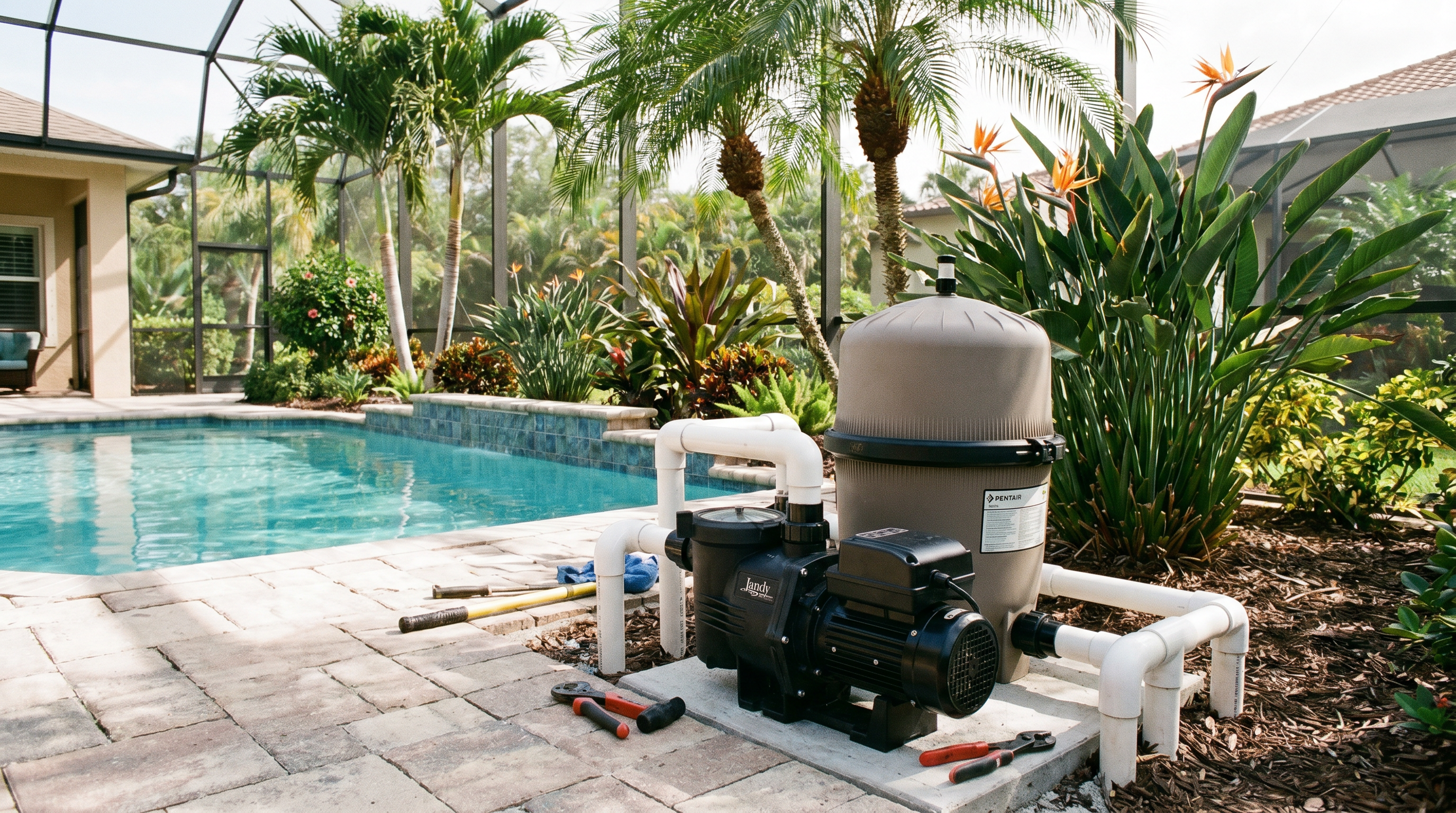
Florida homeowners who upgrade to a variable speed pool pump typically save $50-$100 per month on electricity bills — that's $600-$1,200 in annual savings. With pools running year-round in the Sunshine State, these energy savings are significantly higher than what homeowners experience in northern climates with seasonal pool closures.
A variable speed pool pump Florida installation represents one of the smartest upgrades you can make for long-term cost savings and energy efficiency.
How Variable Speed Pool Pumps Work
Variable speed pumps control motor RPM (revolutions per minute) electronically, allowing the pump to run at different speeds throughout the day. Unlike single-speed pumps that operate at one high-energy setting or dual-speed pumps with just two options, variable speed pumps can adjust from 600 to 3,450 RPM.
The key advantage comes from pump affinity laws: cutting pump speed in half reduces energy consumption by roughly 87%. This means your pump uses dramatically less electricity when running filtration cycles at lower speeds.
Note: Most filtration happens effectively at 1,200-1,800 RPM, far below the maximum speed needed only for vacuuming or spa jets.
Real Florida Energy Savings Numbers
Florida's year-round swimming season amplifies variable speed pump savings compared to seasonal climates. Here's what typical savings look like:
Single-Speed Pump Operating Costs:
Runs 8 hours daily at 3,450 RPM
Consumes approximately 2,500-3,000 watts
Monthly electricity cost: $180-$220 (based on Florida's average $0.12/kWh rate)
Variable Speed Pump Operating Costs:
Runs 8 hours daily at 1,500 RPM average
Consumes approximately 500-800 watts
Monthly electricity cost: $40-$70
The math is clear: variable speed pumps save Florida pool owners $100-$150 monthly, translating to $1,200-$1,800 in annual savings for larger pools.
Florida Energy Rebates and Incentives
Florida utilities offer substantial rebates for energy-efficient pool equipment upgrades. Duke Energy customers can receive up to $100 for qualifying variable speed pump installations, while FPL offers rebates through their pool pump efficiency programs.
These rebates require ENERGY STAR certified pumps and professional installation with proper documentation. The rebate application must be submitted within 90 days of installation.
Tip: Combine utility rebates with federal tax credits for pool equipment that meets efficiency standards — this can reduce your net investment by $200-$400.
Payback Period Calculation for Florida
Variable speed pool pumps cost $800-$1,800 installed, depending on horsepower and features. With Florida's energy savings, most homeowners see payback within 2-3 years:
Conservative Example:
Pump cost: $1,200 installed
Monthly savings: $75
Annual savings: $900
Payback period: 16 months
Aggressive Example (larger pools):
Pump cost: $1,600 installed
Monthly savings: $125
Annual savings: $1,500
Payback period: 13 months
After the payback period, the monthly savings go directly to your bottom line for the pump's 8-12 year lifespan.
Top Variable Speed Pump Brands for Florida
Three manufacturers dominate Florida's variable speed pump market, each offering models suited for different pool sizes and budgets.
Pentair IntelliFlo Series
Pentair's IntelliFlo pumps are the gold standard for variable speed technology. The IntelliFlo3 VSF offers the best value for most Florida pools, while the IntelliFlo VS provides premium features like smartphone connectivity and advanced scheduling.
Florida pool professionals prefer Pentair for reliability in high-heat, high-humidity conditions. These pumps handle continuous operation better than most competitors.
Hayward EcoStar Series
Hayward EcoStar pumps excel in saltwater pool applications, common throughout Florida coastal areas. The variable speed motor design resists corrosion better than standard pumps, extending lifespan in harsh saltwater environments.
EcoStar pumps also integrate seamlessly with Hayward automation systems, popular in Florida's luxury pool market.
Jandy FloPro VS
Jandy variable speed pumps offer excellent mid-range value with solid performance. While not as feature-rich as Pentair or Hayward flagships, FloPro pumps deliver reliable variable speed operation at competitive prices.
These pumps work well for Florida homeowners prioritizing cost savings over premium features.
Common Objections and Answers
Florida homeowners often hesitate about variable speed pump upgrades due to three main concerns.
High Upfront Investment
Yes, variable speed pumps cost 2-3 times more than single-speed pumps initially. However, the monthly energy savings in Florida's year-round climate create positive cash flow within 18-24 months. Think of it as a financing arrangement where the pump pays for itself through lower electricity bills.
Installation Complexity
Variable speed pumps require electrical upgrades in some Florida homes, particularly older properties with inadequate wiring. Professional pool equipment repair contractors handle these upgrades as part of the installation, ensuring code compliance and optimal performance.
Warranty and Longevity Concerns
Quality variable speed pumps carry 2-4 year warranties and typically last 8-12 years with proper maintenance. Florida's demanding climate actually favors variable speed pumps because they run at lower speeds most of the time, reducing mechanical stress and heat buildup.
Does Your Pool Qualify for Rebates?
To qualify for Florida utility rebates, your variable speed pump must meet specific criteria:
ENERGY STAR certification
Professional installation with permits
Replacement of existing single-speed or dual-speed pump
Proper electrical connections and safety switches
Most Florida utilities also require before-and-after photos and installation receipts. Your pool maintenance contractor should handle rebate paperwork as part of professional installation.
Important: DIY installations typically don't qualify for utility rebates, and improper installation can void manufacturer warranties.
5 Common Variable Speed Pump Mistakes in Florida
Oversizing the pump: Bigger isn't always better. Florida pools need proper flow rates, not maximum horsepower. An oversized variable speed pump wastes energy even at low speeds.
Poor programming: Many Florida homeowners run variable speed pumps at high speeds constantly, negating energy savings. Proper programming runs low speeds for filtration and higher speeds only when needed.
Ignoring maintenance: Florida's climate demands regular basket cleaning and impeller inspection. Clogged pumps work harder and consume more energy regardless of variable speed capabilities.
Skipping professional installation: Electrical work and plumbing connections require expertise. DIY installations often result in poor performance and voided warranties.
Choosing based on price alone: The cheapest variable speed pump may not suit Florida's demanding conditions. Invest in quality pumps designed for continuous operation and harsh environments.
When Variable Speed Pumps Make the Most Sense
Variable speed pumps deliver maximum value for specific Florida pool situations:
Large pools (20,000+ gallons): Bigger pools amplify energy savings because pumps run longer for complete filtration.
Pools with water features: Fountains, waterfalls, and spillovers benefit from variable speeds that can adjust flow rates for different effects throughout the day.
Saltwater pools: Salt systems work more efficiently with consistent, moderate flow rates that variable speed pumps provide.
Homes with high electricity rates: Some Florida areas have peak pricing that makes variable speed pumps even more valuable for off-peak operation.
For smaller pools under 15,000 gallons with basic equipment, a quality dual-speed pump might provide better value than variable speed technology.
Schedule Your Variable Speed Pump Installation in Florida Today
Upgrading to a variable speed pool pump represents one of the smartest investments Florida pool owners can make. With year-round operation, substantial energy savings, and available rebates, these pumps typically pay for themselves within two years while providing decades of efficient service.
The Pool Mechanic specializes in variable speed pump installations throughout Central Florida, handling everything from electrical upgrades to utility rebate paperwork. Request your free equipment consultation or call 407-883-0896 for expert guidance on variable speed pump selection and installation.
Frequently Asked Questions
Are variable speed pumps worth it in Florida?
Yes, variable speed pumps are especially worthwhile in Florida because pools operate year-round. Florida homeowners typically save $600-$1,200 annually on electricity costs, with payback periods of 18-24 months compared to 3-4 years in seasonal climates.
How much does a variable speed pool pump save in Florida?
Variable speed pumps save Florida pool owners $50-$150 per month on electricity bills, depending on pool size and usage patterns. Annual savings range from $600-$1,800, with larger pools seeing greater savings due to longer filtration cycles.
Do I need a variable speed pump for my Florida pool?
While not required by law, variable speed pumps make financial sense for most Florida pools. The combination of year-round operation, high electricity rates, and available utility rebates creates compelling economics for upgrading from single-speed pumps.
How long do variable speed pool pumps last in Florida?
Quality variable speed pumps typically last 8-12 years in Florida's climate with proper maintenance. The variable speed operation actually extends pump life because motors run at lower speeds most of the time, reducing mechanical stress and heat buildup.
What rebates are available for variable speed pumps in Florida?
Florida utilities offer rebates ranging from $50-$150 for ENERGY STAR certified variable speed pump installations. Duke Energy and FPL both maintain active rebate programs, though specific amounts and requirements change annually. Professional installation is typically required for rebate eligibility.
Can I install a variable speed pump myself?
While technically possible, DIY variable speed pump installation is not recommended in Florida. Professional installation ensures proper electrical connections, code compliance, and warranty coverage. Most utility rebates also require professional installation with permits and documentation.


Comments