
Pool Pump Repair in Winter Garden, FL | No Flow Fix
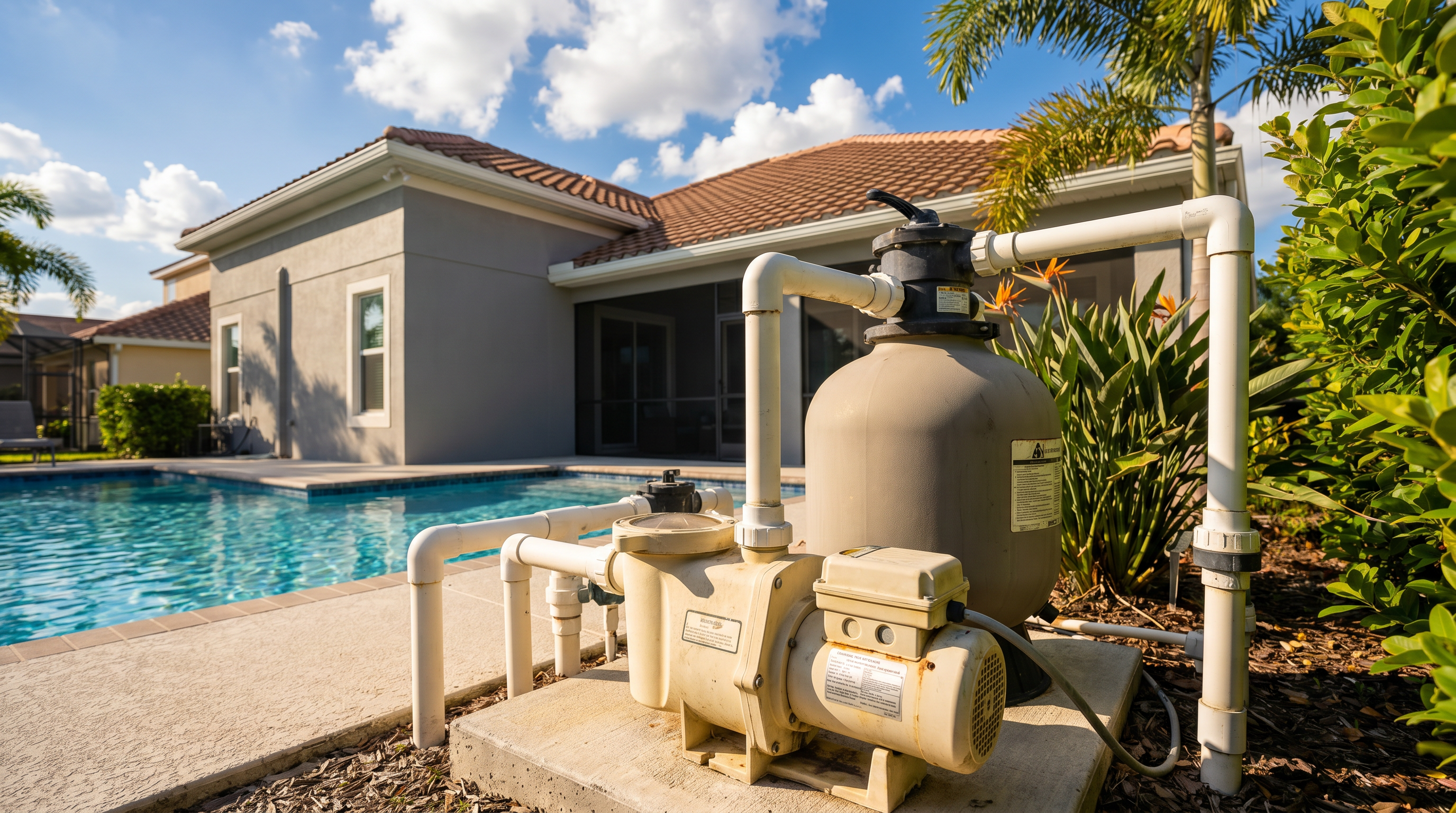
Pool pump repair in Winter Garden is one of the most common service calls we get — and the most confusing for homeowners. Your pump is humming, the motor sounds normal, but the water is sitting dead still. No circulation. No suction. Just a pool slowly turning green while you stare at equipment that seems perfectly fine.
This is a specific failure pattern, not a random one. A pump that runs without moving water almost always has an identifiable cause — and most of them are fixable before your pool chemistry crashes or your equipment sustains serious damage.
What "Running But No Flow" Actually Means
The pump motor and the pump impeller are two separate things. The motor can spin perfectly while the impeller — the component that actually moves water — is blocked, broken, or starved of suction. That's why you hear everything working while nothing happens at the jets or skimmer.
Winter Garden pools deal with this more often than homeowners expect. The area's mix of sandy soil, heavy landscaping, and seasonal debris creates ideal conditions for clogs and equipment stress. If you've also seen this issue in a neighboring area, our breakdown of pump running but no flow in Davenport, FL covers the same failure pattern from a slightly different angle.
The Most Common Causes in Winter Garden Pools
When a pool pump runs but produces no flow, the problem almost always falls into one of five categories. Knowing which one you're dealing with determines whether you can fix it yourself or need a technician on-site.
1. Clogged Impeller
The impeller sits inside the pump housing and spins to draw water through the system. Leaves, debris, and even small pebbles can lodge between the vanes, stopping water movement entirely while the motor keeps spinning. This is the single most frequent cause in residential pools.
2. Air Lock
When air enters the suction line — through a cracked fitting, loose lid, or low water level — the pump loses its prime. It can't draw water because it's pulling air instead. You'll often see air bubbles returning through the jets before flow drops to zero.
3. Clogged Skimmer or Pump Basket
A basket packed solid with debris restricts suction to the point where the pump can't move water efficiently. This is the first thing to check — it's free to fix and takes two minutes.
4. Failing Capacitor or Worn Motor
Sometimes the motor sounds like it's running at full speed but is actually underpowered. A failing capacitor causes the motor to hum without reaching full RPM. The impeller spins too slowly to generate pressure — and you get no flow.
5. Closed or Partially Closed Valve
Winter Garden homeowners who've had recent equipment work sometimes find a valve was left in the wrong position. It sounds obvious, but it's worth checking every valve in your system before assuming you have a mechanical failure.
Warning Signs You Shouldn't Ignore
A pump that's struggling before it fails completely usually gives you signals. Catching them early saves you from a full replacement. Watch for these:
Weak suction at skimmers — debris isn't being pulled in the way it normally would
Air bubbles returning through jets — the system is pulling air somewhere
Pump cycling on and off — thermal overload protection is tripping because the motor is overheating
Grinding or screeching noise — bearing failure inside the motor, not an impeller clog
Cloudy or green water despite chemicals — circulation failure is allowing algae to take hold
High pressure on filter gauge with no flow at jets — blockage on the return side of the system
If you're seeing more than one of these at once, the problem has likely been building for a while. Florida's heat accelerates motor wear significantly — pool equipment in Winter Garden operates under more thermal stress than equipment in cooler climates, according to guidance from the Pool & Hot Tub Alliance.
What You Can Check Yourself — Without Making It Worse
There's a short list of things any homeowner can safely inspect before calling for service. These won't void warranties or cause damage, and they eliminate the easy causes first.
Step 1: Check the water level. It should sit at the midpoint of the skimmer opening. If it's too low, the pump draws air and loses prime.
Step 2: Remove and clean the skimmer basket and the pump strainer basket. Both should be clear. Rinse them under a hose if needed.
Step 3: Inspect the pump lid O-ring. It should be smooth and seated evenly. A cracked or flattened O-ring lets air into the system. A thin coat of O-ring lubricant (not petroleum-based) keeps it sealing correctly.
Step 4: Check every valve position. All main drain and skimmer valves should be open. Return valves should be open.
Step 5: Look at the pressure gauge on your filter. If it reads high (above 30 psi) with no flow at the jets, the filter may need backwashing or the return line has a blockage.
If none of those steps restore flow, the issue is inside the pump housing or motor — and that's where professional equipment matters.
DIY vs. Calling a Pro: Where to Draw the Line
Clearing a clogged impeller is technically a DIY task, but it requires disassembling the pump housing, which means breaking the seal and handling the volute and impeller directly. If you're not familiar with the specific pump model, it's easy to crack a housing or damage the shaft seal in the process — turning a $150 repair into a $600 one.
Motor replacement, capacitor replacement, and any work involving electrical components should go to a licensed pool technician. In Florida, pool electrical work carries specific code requirements, and improper repairs can create safety hazards around water. Our pool equipment repair service covers the full diagnostic — we identify the actual cause before quoting any parts or labor, so you're not paying for guesswork.
The general rule: if the problem is in the plumbing or baskets, you can often handle it. If it's inside the pump or motor, call someone who carries the right tools and replacement parts on the truck.
How Much Does Pool Pump Repair Cost in Winter Garden?
Costs vary significantly based on what's actually wrong. Here's a realistic breakdown:
Variable speed pumps — which most newer Winter Garden homes use — tend to cost more to repair but also last longer when maintained properly. The U.S. Department of Energy notes that variable speed pool pumps can reduce energy consumption by up to 90% compared to single-speed models, making them worth repairing rather than replacing in most cases.
For anything beyond a basket clear or O-ring swap, getting a professional diagnosis before authorizing parts is the smartest move. A pump that appears to need a new motor sometimes just needs a capacitor — a $40 part versus a $500 one.
Schedule Pool Pump Repair in Winter Garden
A pump that isn't moving water is a pool that's on its way to green — and in Central Florida heat, that can happen fast. Whether you're dealing with a complete loss of flow or a pump that's been struggling for a few days, The Pool Mechanic serves Winter Garden with fast, on-site diagnostics and repairs that fix the actual problem.
Request your service appointment or call 407-883-0896 for fast, local pool pump repair in Winter Garden. You can also explore our full range of Winter Garden pool services to keep your equipment running all year.
Frequently Asked Questions
Why is my pool pump running but there's no water flow?
The most common causes are a clogged impeller, air lock in the suction line, a packed pump basket, or a failing motor capacitor. Start by checking the skimmer and pump baskets, then inspect the pump lid O-ring for cracks. If those checks don't restore flow, the issue is likely inside the pump or motor and needs professional diagnosis.
How do I know if my pool pump impeller is clogged?
Signs of a clogged impeller include the pump motor running at normal sound levels with little to no water returning through the jets, low suction at the skimmer, and a pressure gauge reading that's lower than normal. Confirming the clog requires opening the pump housing — something best done by a technician to avoid damaging the housing or seal.
Can I run my pool pump if there's no water flowing?
No. Running a pump without water flow causes the motor to overheat rapidly. Most pumps have thermal overload protection that will shut the motor down, but repeated thermal cycling shortens motor life significantly. Turn the pump off until the cause is identified and fixed.
How long does pool pump repair take in Winter Garden?
Most pump repairs are completed in a single visit. Simple fixes like clearing a clogged impeller or replacing a capacitor take 30–60 minutes on-site. Motor or full pump replacements may require sourcing specific parts but are typically completed within one to two days.
Is it better to repair or replace a pool pump?
If the motor is under 8 years old and the repair cost is less than 50% of a new pump, repair usually makes more sense. For older single-speed pumps, replacing with a variable speed model is often worth the higher upfront cost given the long-term energy savings. A technician can give you a honest recommendation based on the pump's age and condition.
How much does pool pump repair cost near Winter Garden, FL?
Basic repairs like impeller cleaning or capacitor replacement typically run $75–$200. Seal replacements range from $150–$300. Motor replacement costs $350–$600 depending on the pump model. Full pump replacement ranges from $600 to over $1,200 for variable speed units. Getting a diagnostic assessment before authorizing any work helps you avoid paying for parts you don't need.

rr88 com đang bị bàn tán đủ kiểu trong mấy topic về sân chơi online nên mình cũng ghé xem thử cho công bằng, kiểu vẫn hơi nghi nghi nhưng đọc một lúc thì thấy họ trình bày khá gọn, kéo xuống là từng đoạn tách riêng chứ không quăng nguyên mảng chữ dài, nên lướt nhanh vẫn nắm được ý chính. Mình thích nhất là họ để phần nói về nguồn gốc với pháp lý khá rõ ràng, không phải đào sâu mới thấy. Menu đặt chỗ dễ nhìn. Chuyển trang cũng mượt. Nói chung cảm giác làm web đàng hoàng. Mình chỉ xem giao diện với cách bố cục thôi. Phần thông tin nguồn gốc pháp lý được…
Mình thỉnh thoảng cũng xem soi cầu cho vui thôi, coi như một cách tập nhìn dàn số và đối chiếu lại trực giác của mình. Hồi trước hay nghe người quen mách gì thì ghi nấy, trượt là khó chịu cả ngày, nên giờ mình ưu tiên đọc mấy chỗ có giải thích đàng hoàng, đúng sai gì cũng rút ra được cách họ suy luận. Có dạo lướt thấy https://soicauxsmb.pro/ hay nhắc chuyện chọn lọc theo chu kỳ, mình thử áp dụng kiểu gạn bớt số cho đỡ rối chứ không đặt niềm tin tuyệt đối, thấy tâm lý nhẹ hơn, ít bị cảm xúc kéo đi. Với mình mấy thứ này chỉ nên xem như tham khảo,…