
Pool Pump Problems in Winter Garden? How to Diagnose and Fix Common Issues
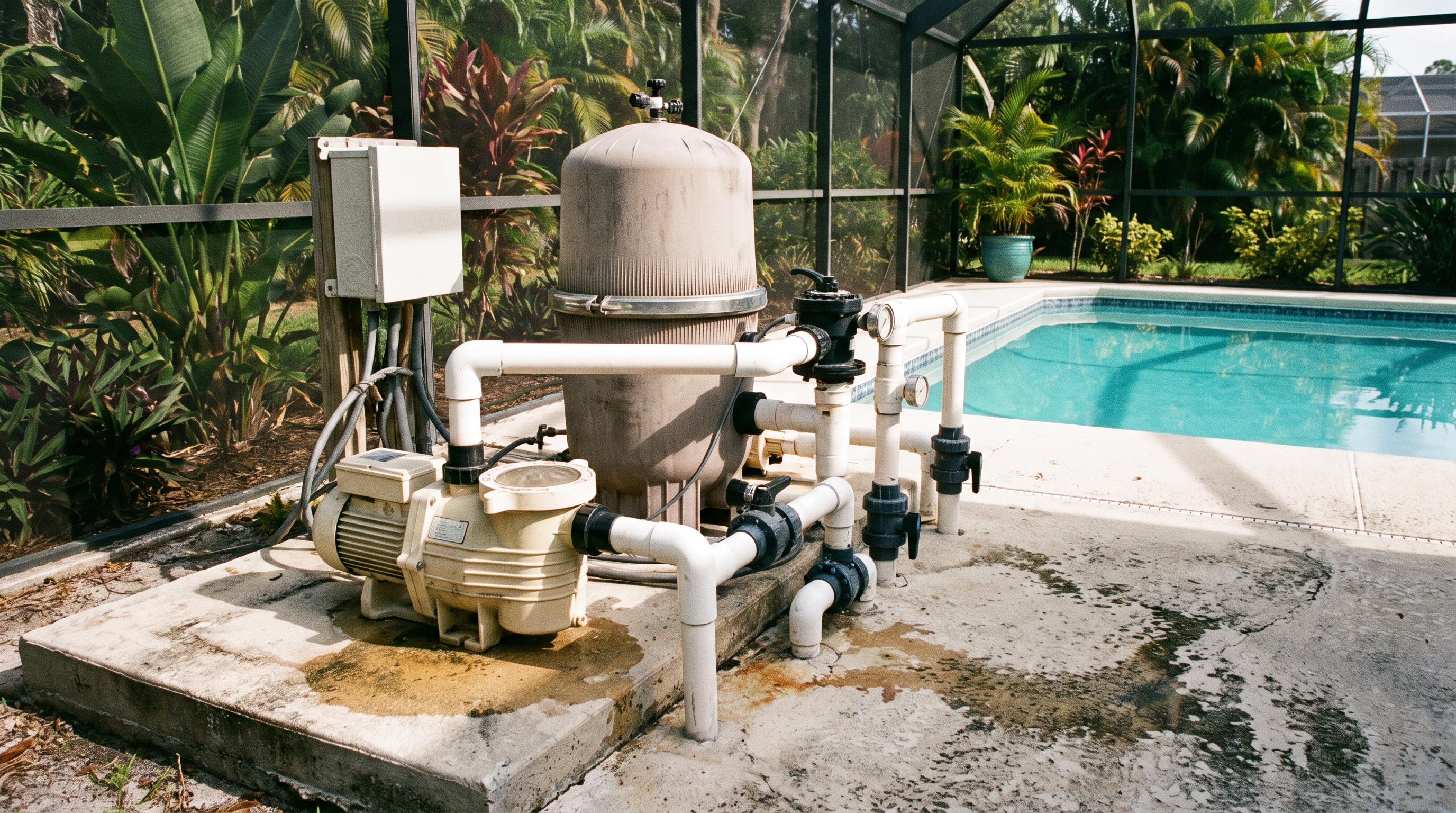
Your pool pump is the heart of your entire pool system — and when it fails, everything else fails with it. For homeowners and short-term rental property managers in Winter Garden, a pump problem isn't just an inconvenience; it can mean a green pool within days, failed health inspections, or unhappy guests. The good news is that most pump problems follow recognizable patterns, and knowing what to look for can save you time, money, and a lot of frustration.
Why Pool Pumps Fail Faster in Florida
Central Florida's climate is beautiful for swimming — but it's genuinely hard on pool equipment. Understanding why pumps wear out faster here helps you catch problems earlier and extend the life of your equipment.
Sand and debris ingestion: Florida's sandy soil gets tracked in and sucked through skimmers. Fine particulate matter accelerates wear on impellers and seals over time.
Heat stress: Pump motors in Winter Garden run in ambient temperatures that regularly exceed 90°F. Add the heat the motor generates on its own and you have a recipe for accelerated wear on bearings, windings, and capacitors.
Hard water damage: Central Florida water is mineral-heavy. Scale buildup inside pump housings and on impellers reduces flow efficiency and forces motors to work harder.
UV degradation: Florida sun breaks down plastic pump lids, o-rings, and external wiring faster than in northern climates. A lid that looks fine may have become brittle enough to crack under normal use.
Seasonal startup issues: Pumps that sit partially idle during cooler months — or that get pushed hard after a long rainy season — often reveal hidden problems when conditions change.
7 Common Pool Pump Problems — and What to Do About Each
1. Pump Won't Turn On
A pump that won't start at all is one of the most alarming problems, but the cause is often simpler than you'd expect. Start with the basics: check your timer and make sure the pump is actually scheduled to run. Then check the circuit breaker — if it's tripped, reset it once and watch whether it holds. If the breaker trips again immediately, stop and call a professional.
If power is reaching the pump but nothing happens, the issue is likely a failed start capacitor. The capacitor is what gives the motor the initial jolt it needs to start spinning. Capacitors are relatively inexpensive parts, but they store an electrical charge even when unplugged — replacement should be done by a licensed technician. If the capacitor tests fine, the motor itself may have failed due to burned windings from overheating or age. At that point, a motor replacement or full pump replacement is usually the most cost-effective path.
2. Pump Trips the Breaker
A pump that starts but repeatedly trips the breaker is telling you something important. The two most common culprits are motor overheating and an internal short circuit. Overheating is common in Florida summer months, especially if your pump is in direct sun with no shade or ventilation around the equipment pad.
Check whether the motor feels extremely hot to the touch after it trips. If so, improving airflow around the equipment pad and cleaning any debris around the motor vents may help temporarily — but a motor that's hitting thermal cutoff regularly is one that's nearing the end of its life. A short circuit in the motor windings or wiring is a more serious issue that requires a professional diagnosis with a multimeter. Don't repeatedly reset a breaker that keeps tripping; you risk damaging other equipment or creating a fire hazard.
3. Pump Is Loud — Grinding, Humming, or Screeching
A pool pump should run with a consistent, relatively quiet hum. New or worsening noises are almost always a sign that something is wrong mechanically.
Grinding or screeching: This is typically bearing failure. Bearings wear out over time, especially in humid Florida conditions where moisture can work its way into the motor. Once bearings start grinding, the motor will usually fail within days to weeks. A bearing replacement or motor swap is needed — this isn't a wait-and-see situation.
Loud humming with no movement: The motor is receiving power but the shaft isn't spinning freely. This can mean a seized motor, or more commonly, the capacitor has failed and the motor can't start its rotation.
Gurgling or sucking sounds: This points to air in the system — cavitation. The pump is pulling air instead of water, which means there's a suction-side leak or a water level problem. See problem #4 below.
4. Pump Loses Prime / Air in the System
When your pump loses prime, it means it can't maintain a solid column of water through the suction line and ends up moving air instead of water. You'll often notice this through a gurgling sound, bubbles returning through the return jets, or an erratic pressure gauge reading.
Common causes include a cracked or improperly seated pump lid, a worn lid o-ring that's allowing air to be drawn in, a leaking union fitting on the suction side, or a water level that's dropped below the skimmer opening. Start by checking your pool's water level — it should be at mid-skimmer. Then inspect the pump lid and o-ring; the o-ring should be supple and seated properly in its groove. Lubricate it with a silicone-based lubricant if it's dry or stiff. If you've gone through those checks and the pump still won't hold prime, the shaft seal or suction plumbing may be the issue — time to call a pro.
5. Pump Runs But No Water Flow
This is one of the most common complaints and one of the most misunderstood. The pump motor sounds fine and is clearly running, but little to no water is moving. The most frequent cause in Florida pools is a clogged impeller — leaves, hair, and debris bypass the basket and pack tightly around the impeller vanes, essentially blocking all flow. A dirty or channeled filter that's causing extreme backpressure can also restrict flow enough to make the pump seem ineffective.
We've covered this scenario in detail in our pool repair guide — including step-by-step impeller clearing instructions and filter pressure thresholds to watch. If you've ruled out a clogged basket and your filter pressure is in a normal range, the impeller is the most likely target.
6. Pump Leaks Water
Water pooling under or around your pump equipment pad is a problem that tends to get worse quickly. The three most common leak points are:
Shaft seal: The mechanical seal where the motor shaft enters the wet end of the pump. When this seal fails, water drips from the underside of the pump housing. A failed shaft seal will typically also allow water to reach the motor bearings, accelerating motor failure — so this repair shouldn't be delayed.
Pump lid and o-ring: A cracked lid or a compressed, flattened o-ring will leak from the top of the pump housing, especially under pressure.
Union fittings: The threaded or slip unions that connect your pump to the plumbing can leak at their o-rings or if the fitting has cracked. These are usually straightforward repairs.
Catching a pump leak early is important — water that reaches the motor almost always causes secondary damage. Our team handles pool equipment repairs including shaft seal replacements, union repairs, and full pump housing swaps.
7. Pump Runs But Pool Isn't Cleaning
If your pump sounds healthy and your pressure gauge looks normal but your pool water is staying cloudy or debris-covered, the problem may not be the pump itself. On variable speed pumps, check the RPM setting — if someone has accidentally set the pump to run at a very low speed for the entire cycle, there simply isn't enough turnover to keep the water clear. Most Florida pools need to turn over their full volume at least once per day, which requires running your pump at an appropriate speed for enough hours.
The other frequent culprit is a dirty or exhausted filter. A filter that's due for a backwash or a cartridge cleaning will allow adequate flow to show on the pressure gauge while still doing a poor job of actually filtering the water. Good pool maintenance includes regular filter service — don't overlook it when troubleshooting water quality issues.
Variable Speed vs. Single Speed Pumps in Florida
If you're facing a pump replacement, this is the moment to consider upgrading to a variable speed (VS) pump if you haven't already. Florida's warm climate means your pump needs to run year-round — often 8 to 12 hours a day. A variable speed pump runs at lower RPMs for routine circulation, drawing significantly less electricity than a single-speed motor running at full power constantly. The energy savings in Central Florida can be substantial enough to pay back the cost of the upgrade in a couple of years.
Beyond cost, variable speed pumps tend to run quieter, generate less heat, and put less wear stress on your plumbing and filter. The Florida Energy Extension Service has documented that variable speed pool pumps can reduce pump energy use by up to 90% compared to standard single-speed models — a compelling case for any homeowner or property manager watching their utility bills.
For short-term rental operators in Winter Garden managing multiple properties, VS pump upgrades across your portfolio can meaningfully reduce operating costs while also reducing emergency repair calls — these pumps simply run cooler and last longer.
Frequently Asked Questions
How do I know if my pool pump motor needs to be replaced or just repaired?
A good rule of thumb: if the repair cost exceeds 50–60% of the cost of a new pump, replacement usually makes more financial sense — especially if the motor is more than 5–7 years old. Bearing replacements and capacitor swaps are typically worth doing on a younger motor. A burned motor with seized windings on a 10-year-old pump is usually a replacement candidate.
How long do pool pumps typically last in Florida?
In Central Florida's heat and humidity, most single-speed pump motors last 8 to 12 years with proper care. Variable speed motors tend to last longer because they run at lower speeds most of the time, generating less heat. Poor water chemistry, running the pump dry, and debris ingestion are the most common factors that cut that lifespan short.
Can I run my pool without a working pump for a few days?
Florida's heat makes this risky. Without circulation, pool water can turn green within 24 to 48 hours in warm weather — especially in summer. For short-term rental properties where guests are arriving soon, even a one-day pump outage can mean a failed inspection or a guest complaint. Emergency pump repair or a temporary solution is almost always worth pursuing quickly.
Why does my pool pump keep losing prime after I re-prime it?
If the pump primes and runs fine briefly but loses prime repeatedly, you almost certainly have an air leak on the suction side of the system. The most common spots are the pump lid o-ring, a cracked pump lid, a loose union fitting, or a failing shaft seal. A suction-side air leak won't fix itself — the problem will worsen over time and can eventually burn out the motor by causing it to run dry.
Get Same-Day Pool Pump Repair in Winter Garden
A pump problem that starts small can turn into a green pool or a failed motor within days — especially in Florida heat. The Pool Mechanic serves Winter Garden and all of Central Florida with fast, reliable pool pump diagnosis and repair. Whether you're a homeowner dealing with a grinding motor or a property manager who can't afford downtime before a guest check-in, our team is ready to help. Call us today at 407-883-0896 for same-day emergency service or to schedule a pump inspection.


Comments