
Pool Heater Not Working? Common Causes and When to Call a Pro in Winter Garden, FL
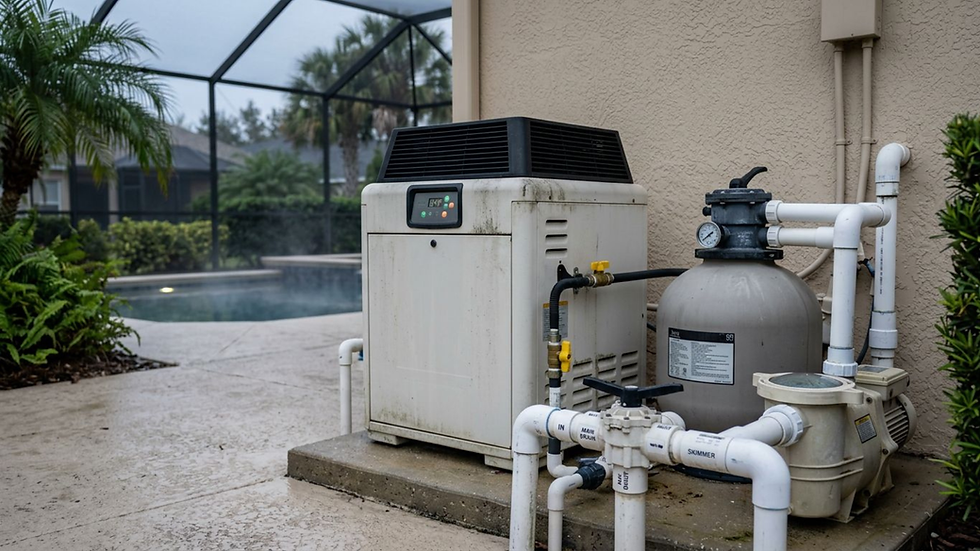
A pool heater that refuses to fire up always seems to pick the worst possible moment — right before a family weekend, during a holiday rental booking, or on the first genuinely cold night Central Florida has seen in months. If your pool heater is not working in Winter Garden, FL, you're not alone, and the cause is usually something specific and fixable. This guide walks through the six most common reasons pool heaters fail, what you can safely check on your own, and exactly when the smartest move is to call a licensed technician.
Why Pool Heaters Fail More Often in Central Florida
You might assume Florida's warm climate is easy on pool equipment. In some ways it is — but pool heaters in the Winter Garden area face a specific set of stressors that homeowners in cooler climates don't deal with.
Hard water and calcium buildup: Central Florida's water supply is notoriously high in calcium and mineral content. Over time, those minerals deposit inside the heat exchanger, restricting flow and reducing heat transfer efficiency. This is one of the leading causes of heater failure in this region.
Heat stress on components: Running a gas heater in Florida's already high ambient temperatures puts extra thermal stress on internal components, including the control board and pressure switches.
Seasonal startup issues: Many homeowners and short-term rental operators run their heaters infrequently during summer, then expect them to fire up perfectly when cooler weather arrives in November or December. Heaters that sit idle for months are more likely to have ignition problems, corroded contacts, and stiff bypass valves.
Understanding these regional factors helps explain why the same heater that works fine in other climates needs more attention here.
The 6 Most Common Causes of Pool Heater Failure
1. Pilot Won't Ignite or Igniter Failure (Gas Heaters)
On gas-fired heaters — both natural gas and propane — the ignition system is often the first thing to fail. Older units use a standing pilot light, while newer models use electronic ignition. If you hear clicking but no ignition, or if the heater attempts to start and then shuts off, the igniter, flame sensor, or thermopile is likely the culprit. Dirt, corrosion, and age all degrade these components. This is not a DIY repair — gas ignition components should only be handled by a licensed technician.
2. Low Water Flow or Flow Switch Error (Most Common)
This is the single most common reason a pool heater won't run. Every pool heater has a flow switch — a safety device that prevents the unit from firing unless adequate water is moving through the system. If flow drops below the minimum threshold, the heater shuts down and often displays a flow-related error code.
Common causes of low flow include a dirty or clogged filter, a failing pump, a closed valve somewhere in the system, or a clogged skimmer basket. This is one area where you can do some useful checking yourself before calling anyone — more on that below.
3. Thermostat or Control Board Failure
The control board is the brain of your pool heater. If it fails, the heater may not respond to temperature settings, may display error codes, or may simply appear completely dead with no display at all. Thermostat sensors can also drift or fail, causing the heater to cycle on and off erratically or not reach the set temperature. Board replacements are a legitimate repair option on newer units, but on older heaters the cost can make replacement a smarter financial decision.
4. Heat Exchanger Scaling from Hard Florida Water
The heat exchanger is the core component that actually transfers heat from the burner to your pool water. In Central Florida's hard water environment, calcium and mineral scale accumulate inside the exchanger's copper or cupronickel tubes over time. Heavy scaling insulates the tubes, reducing heat transfer, forcing the heater to work harder, and eventually causing the unit to overheat and shut down on high-limit. In severe cases, scaling can crack the exchanger itself — a failure that typically means it's time to weigh repair costs against a new unit. The U.S. Department of Energy recommends regular maintenance to keep pool heating systems running efficiently, and that's especially true in mineral-rich water areas like ours.
5. Pressure Switch or Bypass Valve Issues
Separate from the flow switch, most heaters also include a pressure switch that monitors water pressure on the inlet side. If this switch fails or sticks, the heater will shut down even when water flow is perfectly adequate. The bypass valve — which regulates how much water passes through the heater versus bypassing it — can also seize up after sitting unused, disrupting flow balance and triggering safety shutoffs. A stuck bypass valve is a surprisingly common Winter Garden pool heater problem after long periods of non-use.
6. Gas Supply Issues (Propane and Natural Gas Heaters)
If the heater attempts to ignite but produces no flame at all, the problem may be upstream of the unit entirely. A closed gas shutoff valve, a low propane tank, a tripped regulator, or a supply pressure problem from the utility can all prevent ignition. Always verify that gas is flowing to the unit and that all shutoff valves are fully open before assuming the heater itself has failed.
What Error Codes Mean on Common Brands
Modern pool heaters display error codes that can point you toward the problem quickly. Here's a general reference for the most common brands in the Winter Garden area:
Pentair MasterTemp / Max-E-Therm: “LO” indicates a low water flow condition. “HI” means high limit triggered — usually from scaling or restricted flow. “BO” points to a bypass valve issue.
Hayward H-Series: “IF” means ignition failure. “PS” indicates a pressure switch fault. “BD” or “BUFD” signals a bypass or flow problem.
Jandy JXi / LXi: These units display plain-language messages like “Check Flow” or “Check Ignition” on the control panel, making diagnosis somewhat more straightforward.
Error codes are a starting point, not a final diagnosis. A code that points to flow, for example, could trace back to the filter, the pump, the flow switch itself, or a valve issue — so following up with a hands-on inspection is always necessary.
What You Can Safely Check Yourself
Before calling for service, there are a few things any homeowner or property manager can safely inspect:
Filter pressure gauge: Check the pressure gauge on your filter. If it reads more than 8–10 PSI above your normal clean reading, the filter is dirty and restricting flow. A filter cleaning or backwash may be all that's needed to restore adequate flow to the heater.
Skimmer and pump baskets: Clear out any debris from the skimmer basket and the pump strainer basket. Blockages here reduce flow system-wide.
Bypass valve position: Locate the heater bypass valve and confirm it's positioned correctly per your heater manual — typically in the open or mid-flow position.
Gas shutoff valves: Confirm all gas supply valves are fully open and, for propane systems, that the tank isn't low or empty.
Thermostat setting: Confirm the set temperature is actually higher than the current water temperature. Some digital controllers reset after a power interruption.
If none of these checks reveal an obvious problem, it's time to bring in a pro. Our pool equipment repair team can run a full diagnostic on your heater system and identify the exact failure point.
What Requires a Licensed Technician
Several heater repairs are not safe or legal to attempt without proper licensing and training:
Any work involving gas lines, gas valves, or combustion components
Heat exchanger inspection, descaling, or replacement
Control board or thermostat replacement
Igniter, flame sensor, or thermopile replacement
Pressure switch replacement or adjustment
Gas-related repairs in particular carry real safety risks. A technician who is not properly trained can create hazards that go far beyond a non-functioning heater. Always insist on working with a licensed pool service professional for these components.
Repair vs. Replace: When a New Heater Makes More Sense
Pool heater repair costs vary widely based on the component involved. A flow switch replacement might run $150–$250 in parts and labor. A control board can cost $400–$700 installed. A heat exchanger replacement — when one is available for your model — can approach $1,000 or more, putting you in territory where a new unit starts to look attractive.
General guidance on when to replace rather than repair:
The unit is more than 8–10 years old and requires a repair costing more than 50% of replacement value
The heat exchanger has cracked or failed and the heater is older than 7 years
Replacement parts for your model are discontinued or backordered indefinitely
The heater has had multiple significant repairs in a 12-month period
For short-term rental property managers in the Winter Garden and Four Corners area, a failed pool heater during peak booking season has a real dollar cost in refunds and negative reviews. In those situations, the calculus often favors getting a new, reliable unit installed quickly rather than waiting on a marginal repair. Our pool repair specialists can give you an honest assessment of whether repair or replacement is the smarter call for your specific situation.
Frequently Asked Questions
How long does a pool heater typically last in Central Florida?
Most gas pool heaters last 8–12 years with regular maintenance. In Central Florida, the hard water and mineral-rich environment can shorten that lifespan if scale buildup in the heat exchanger isn't addressed periodically. Annual inspections and occasional descaling go a long way toward getting the full service life out of your unit.
Can I run my pool heater with a dirty filter?
You should not. A dirty filter restricts water flow, which triggers the heater's flow switch and causes it to shut down as a safety measure. Running the system repeatedly in this condition puts unnecessary stress on the pump and can cause the heater to overheat. Clean or backwash the filter first, then attempt to run the heater again.
Why does my pool heater turn on but then shut off after a few minutes?
Short cycling — where the heater fires up and then shuts off quickly — usually points to one of three causes: inadequate water flow triggering the flow switch, a high-limit safety cutout due to restricted flow or scaling, or a failing flame sensor on gas units. A technician can run through the sequence of events to identify which safety mechanism is cutting the unit off and why.
Is it worth heating a pool in Winter Garden during winter months?
Absolutely — and this question comes up often from short-term rental owners. Central Florida winters are mild but cool enough that pool temperatures without a heater can drop into the low 60s°F, which most guests find uncomfortable. Heated pools are a significant selling point for vacation rentals in the area, and many property managers report meaningfully higher booking rates and guest satisfaction scores when the pool stays consistently warm through the cooler months.
Get Your Pool Heater Running Again — Same-Day Service Available
A broken pool heater doesn't have to mean a cold pool and a canceled booking. The Pool Mechanic serves homeowners and property managers throughout Winter Garden, Davenport, Clermont, Reunion, and the surrounding areas with fast, reliable pool heater diagnostics and repair. Whether you're dealing with an ignition issue, a flow error, or a heat exchanger that's seen better days, our technicians will give you a straight answer and get your system back online. Call us at 407-883-0896 for same-day service or to schedule an equipment inspection.


Comments